 Datum Machine
Datum Machine
Datum Machine
Engineered for high accuracy 3D component fabrication and localized industrial structural layout processing.
Strategic analysis of metalworking, maritime fabrication, and mechanical engineering sectors in Greece.
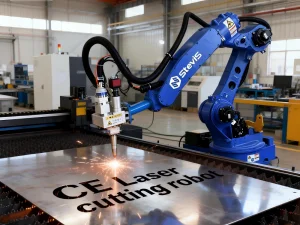
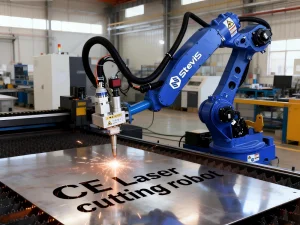
The industrial architecture of Greece is undergoing a massive, structural transformation. Accelerated by modernization funding programs under the Greece 2.0 National Recovery and Resilience Plan, Greek manufacturers in industrial heartlands such as Thessaloniki (Sindos Industrial Zone), Athens (Aspropyrgos & Elefsina), and Larissa are actively phasing out outdated manual sawing, stamping, and legacy flat-bed CO2 lasers. Instead, they are integrating intelligent, multi-axis robotic laser systems to streamline their manufacturing setups.
The Hellenic manufacturing framework comprises specific clusters that demand spatial cutting versatility. These include:
Consequently, the demand for Robotic Laser Cutting Systems Suppliers in the Greece market is expanding rapidly. Greek firms seek experienced industrial partners capable of delivering turnkey solutions, complete with European CE conformity, high-speed fiber resonators, and CAD-to-path offline software integration.
Analyzing global adoption patterns of 6-axis and 7-axis robotic fiber laser cells.
Globally, robotic laser cutting has transitioned from a niche automotive assembly line application into a mainstream manufacturing paradigm. Traditionally, high-power fiber lasers were mounted on Cartesian gantry systems. While excellent for processing flat sheet metal, these setups fail when faced with hydroformed automotive parts, bent tubes, structural H-beams, and deep-drawn enclosures.
By pairing dynamic articulated robotic arms with high-precision fiber laser heads, manufacturers gain a competitive edge. This setup allows the tool center point (TCP) to access intricate shapes and complex angles in a single setup, eliminating the need for manual repositioning, secondary finishing, and custom stamping dies.
Today, key industrial nations like Germany, the United States, Japan, and China are integrating these robotic cutting cells with smart factory ERP systems. By using CAD-neutral offline programming (OLP) tools, operators can transition from design concepts to active fabrication in minutes, making low-volume, high-mix production highly cost-effective.
How Shanghai Datum Machine leverages supply chain maturity and specialized R&D to deliver high-performance robotic cells.
For Greek industrial enterprises, sourcing automation equipment requires a careful balance between high capital efficiency and state-of-the-art technology. Shanghai Datum Machine Co., Ltd. delivers this balance by combining advanced R&D with the efficiency of China's industrial supply chains.
Our manufacturing model delivers distinct structural advantages:
Located in the Yangtze River Delta manufacturing corridor, Shanghai Datum enjoys immediate access to high-precision component casting, heavy-duty structural fabrication, optics, and electronics. This dense ecosystem reduces component lead times, allowing us to build, calibrate, and ship custom robotic laser cells in a fraction of the time required by Western European suppliers.
By optimizing assembly workflows and maintaining strong partnerships with leading component manufacturers (including IPG, Raycus, Yaskawa, FANUC, and collaborative arm builders), we deliver robust, high-performance systems. Our solutions offer the same structural reliability, path precision, and software capability as Western alternatives at a more accessible price point.
We do not rely on a one-size-fits-all model. Every industrial challenge requires a unique configuration. We tailor our systems—ranging from customized multi-station rotators to 7-axis track-mounted long-reach setups—to fit your facility's layout and match your specific production requirements.
Practical integration scenarios of robotic laser cells within active Greek industrial sectors.
Perfect for cutting contoured deck plates, custom pipe penetrations, and marine-grade aluminum components at Hellenic ship repair facilities. This system eliminates manual layout errors and speeds up welding preparation.
Enables clean, highly accurate cuts on complex steel structures, truss plates, and H-beams used in seismic-resistant structural frames. The 3D robotic cutting head easily handles beam chamfering and bolt-hole positioning.
Enables local Greek manufacturers of agricultural machinery to quickly adjust production lines for customized product variations. This flexibility reduces tooling costs and speeds up assembly times for harvesters, seeders, and trailers.
Key technical specifications that procurement officers must review when choosing robotic laser cells.
Procuring a robotic laser cutting system is a complex capital investment. To ensure long-term ROI and operational safety, industrial buyers should verify several key technical features:
What technologies will shape the next generation of industrial automated fabrication?
The manufacturing industry is evolving rapidly, driven by three major technological shifts:
Modern OLP software now uses AI to optimize robot joint movements, automatically predicting and avoiding axis singularities. This technology ensures smooth cutting motions, reduces mechanical wear on the robotic joints, and eliminates surface blemishes during complex path transitions.
While high-speed heavy cutting still requires traditional industrial robots, collaborative robot (cobot) platforms are gaining popularity for flexible, small-batch tasks. Their easy programming systems allow operators to teach paths manually, making them perfect for local workshops and custom fabricators.
Multi-axis robots can easily switch between processing heads. This flexibility allows factories to deploy hybrid systems that handle both cutting and welding, reducing equipment footprint and maximizing capital utilization.
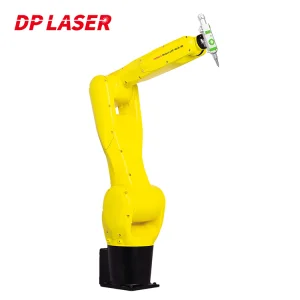
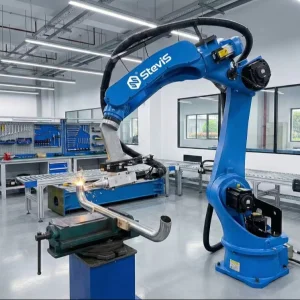
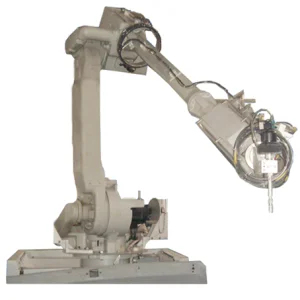
A comprehensive selection of 6-axis, 7-axis, and collaborative systems configured for European industrial standards.
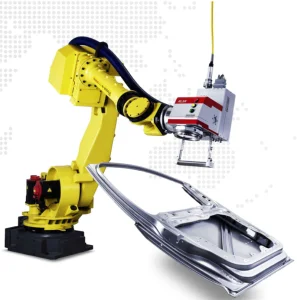
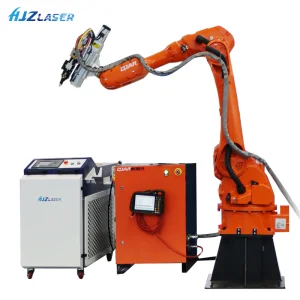
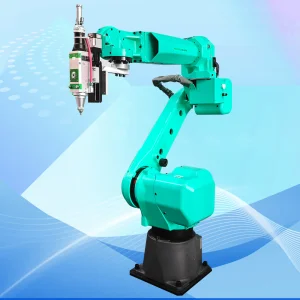
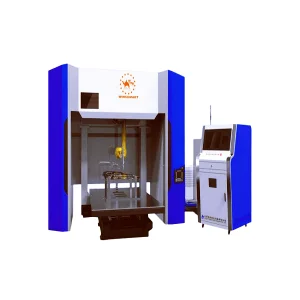
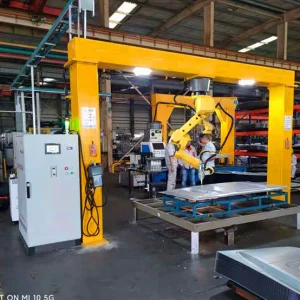
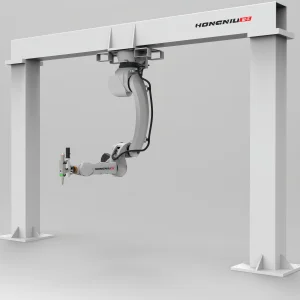
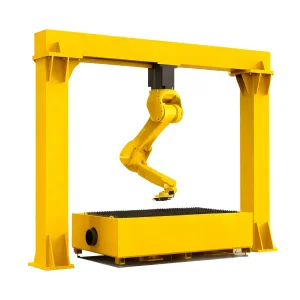
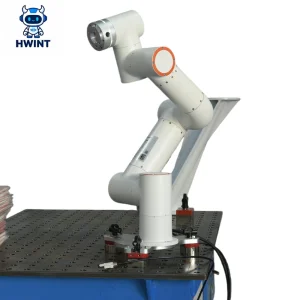
A premier global automation laser cutting manufacturer specializing in fiber laser integration, CNC systems, and custom automation cells.
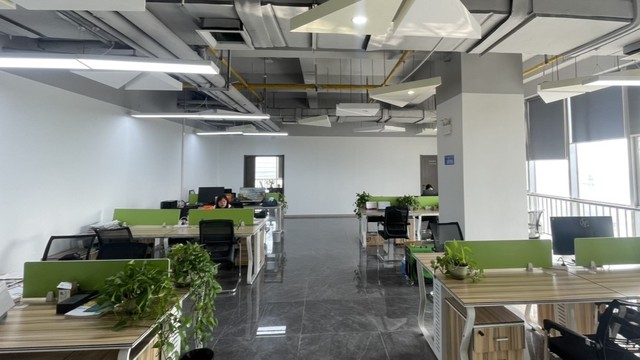
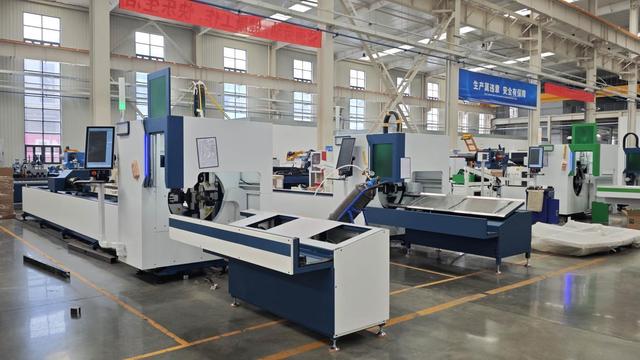
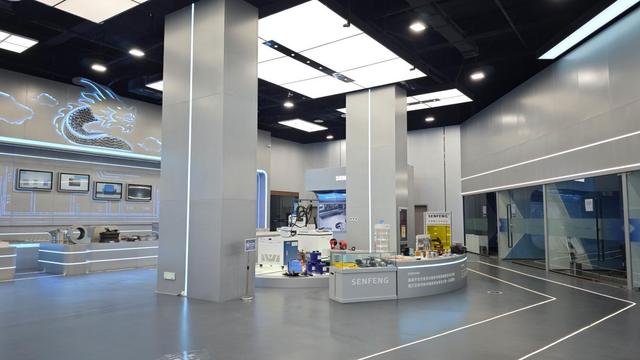
Shanghai Datum Machine Co., Ltd. is a professional China automation laser cutting manufacturer specializing in fiber laser cutting systems, CNC cutting solutions, and smart manufacturing equipment for global industrial customers. With extensive experience in advanced manufacturing technologies, we are dedicated to providing high-performance automation solutions that improve productivity, precision, and operational efficiency across a wide range of industries.
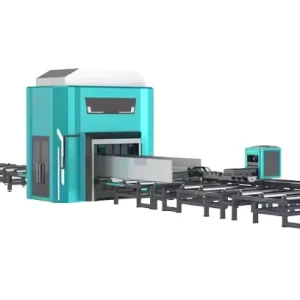
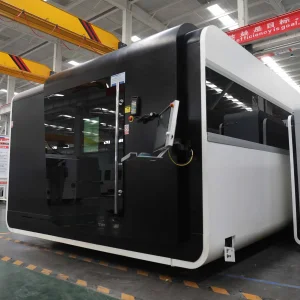
Our product portfolio includes fiber laser cutting systems, CNC laser cutting equipment, tube laser cutting machines, sheet metal processing solutions, robotic laser cutting systems, automated loading and unloading systems, laser production lines, and customized manufacturing automation solutions. Designed to meet the evolving demands of modern factories, our equipment delivers exceptional cutting accuracy, high-speed performance, reduced material waste, and reliable long-term operation.
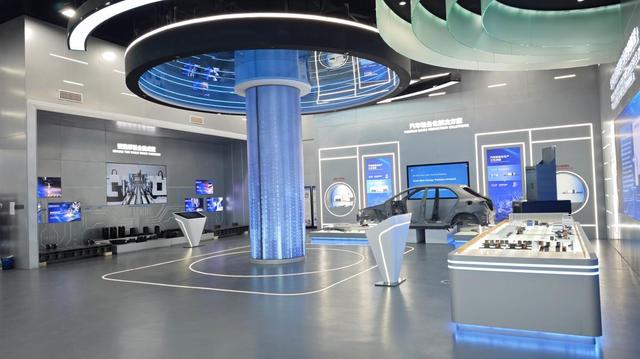
At Datum Machine, innovation is at the center of our development strategy. Our engineering team continuously integrates intelligent control technologies, automation systems, and advanced manufacturing concepts to help customers build more efficient and flexible production environments. From standalone laser cutting equipment to fully integrated smart factory solutions, we provide comprehensive support tailored to each customer's production requirements.
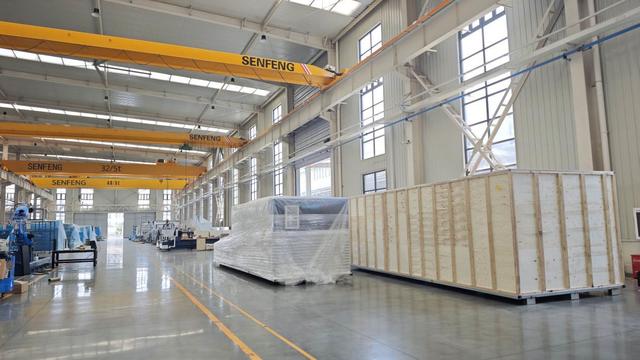
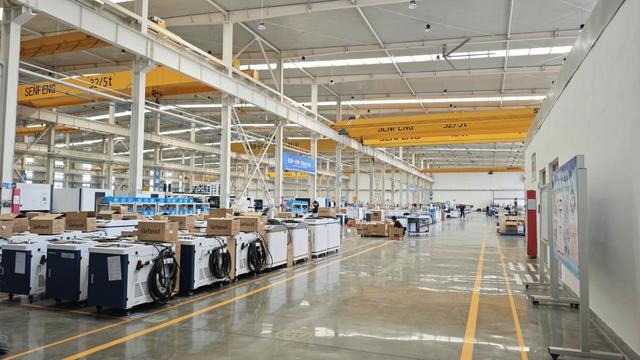
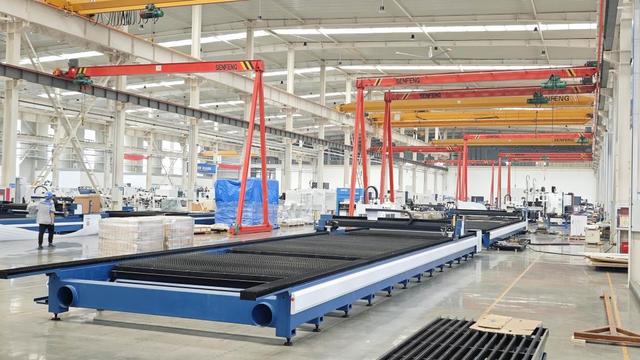
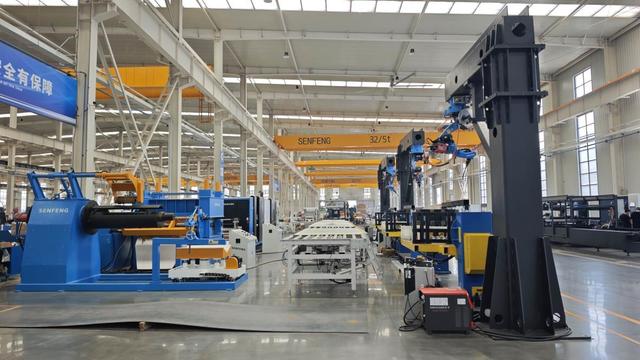
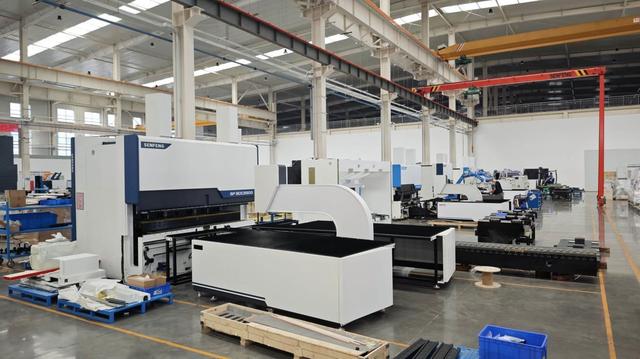
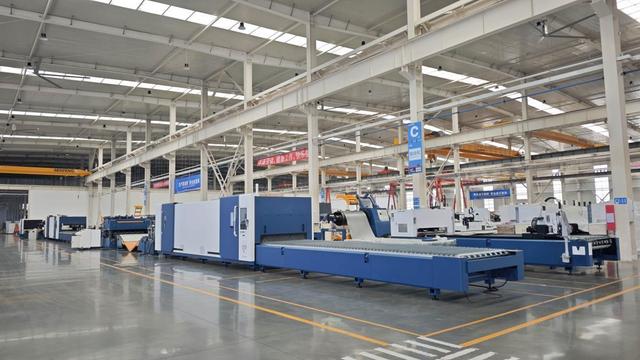
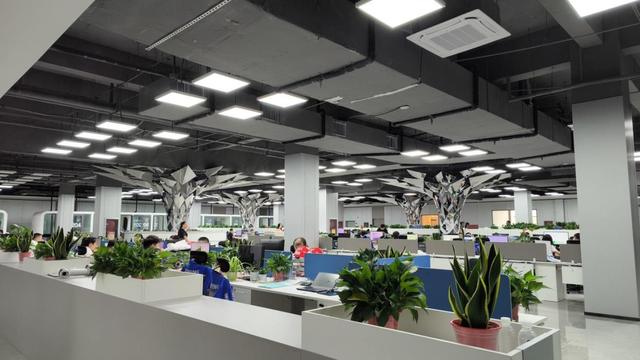
Quality and reliability are fundamental to our manufacturing philosophy. We maintain strict quality control procedures throughout design, production, testing, and delivery to ensure every system meets international performance and safety standards. Our modern manufacturing facilities and experienced technical team enable us to provide consistent quality and dependable service for customers worldwide.
Serving clients across automotive, metal fabrication, machinery manufacturing, construction, aerospace, electronics, and industrial processing sectors, Shanghai Datum Machine Co., Ltd. has established a strong reputation for advanced technology, customized solutions, and responsive customer support. We are committed to becoming a trusted global partner in automation laser cutting, helping manufacturers achieve higher efficiency, smarter production, and sustainable growth through innovative laser processing technologies.
Expert answers addressing the technical, financial, and operational aspects of robotic integration in Greece and European markets.
Traditional flatbed CNC lasers are restricted to 2D flat sheets. Articulated robotic arms, typically featuring 6 or 7 axes of movement, can cut complex 3D parts, tubes, structural beams, and curved stampings. This capability eliminates the need for expensive secondary stamping dies and reduces manual handling in structural and maritime metalwork.
We offer comprehensive remote and on-site support packages. Before delivery, we build, configure, and calibrate your system, performing extensive test cuts on your material samples. We supply detailed installation manuals, video walkthroughs, and arrange on-site engineering visits for setup, configuration, and operator training.
Yes. All systems shipped to Greece and the EU comply with the Machinery Directive 2006/42/EC and related laser safety standards. We supply fully enclosed Class 1 safety rooms, safety light curtains, safety door interlocks, and exhaust extraction systems to protect operators from laser radiation and fine dust.
Our controllers and offline programming (OLP) systems support standard design formats, including AI, LAS, DXF, STEP, IGES, and BMP. You can import files directly from CAD platforms like SolidWorks, Inventor, and AutoCAD, converting designs to precise machine paths quickly.
We offer high-performance fiber laser sources from Raycus, MAX, and IPG, with power ratings ranging from 1kW to 8kW+. For cutting thin steel casing and general automotive components, 1kW to 2kW is standard. For thicker structural beams or marine-grade plates, we recommend 3kW to 6kW, or up to 8kW systems to maintain high feed rates.
Yes. Many of our articulated robotic arm systems are designed as multi-purpose workstations. By swapping the processing head and updating the programming path, you can transition the cell from 3D laser cutting to laser welding, maximizing equipment utility.
Fiber lasers require very little daily maintenance compared to old CO2 lasers. Key tasks include checking and replacing the protective optics window on the cutting head, keeping the robot axis rails clean and lubricated, and ensuring the water chiller unit operates correctly.
By mounting a 6-axis robotic arm on a linear rail (the 7th axis), you significantly extend the system's reach. This configuration allows the robot to move along long workpieces, such as structural H-beams or large maritime panels, without having to reposition the part.
Partner with Shanghai Datum Machine. We deliver high-precision, CE-compliant robotic cutting and welding cells configured for the Greek and European markets. Contact our engineering team for customized layouts, technical specifications, and factory direct quotes.
Send Inquiry Now