Datum Machine
Datum Machine
Datum Machine
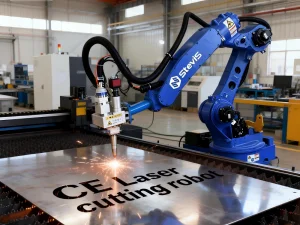
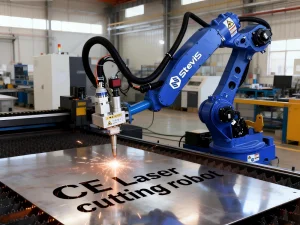
The manufacturing corridor of Chicago and the greater Illinois region stands as one of the most critical industrial hubs in North America. For decades, manufacturers in metal fabrication, automotive assembly, aerospace components, and structural steel processing have relied on traditional cutting systems. Today, the competitive landscape demands a pivot to robotic laser cutting systems that deliver unmatched throughput, extreme volumetric accuracy, and flexible operational programming.
By integrating multi-axis articulated robotic arms with high-brightness fiber laser sources, modern fabrication facilities can eliminate complex hard-tooling setups, slash processing cycle times by up to 60%, and achieve clean, oxide-free cuts across challenging 3D contours. This whitepaper analyzes the technical parameters, localized market forces, and systemic growth patterns governing robotic laser implementation in the Chicago market.
"Implementing high-power robotic fiber laser cutting isn't simply an upgrade in cutting speed; it is an overhaul of factory floor dynamics, enabling low-volume, high-mix custom production run paradigms."
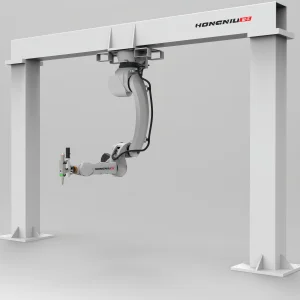
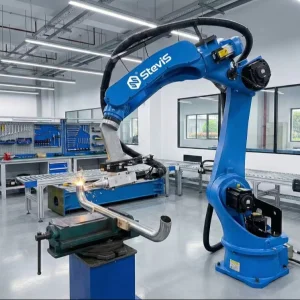
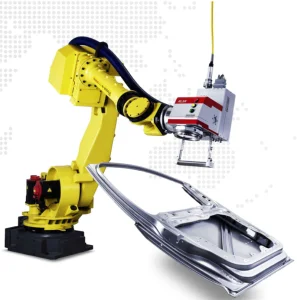
Traditional 2D flatbed laser cutting systems are restricted by their Cartesian design, incapable of handling structural sections, pre-formed stamped components, and complex multi-plane curved profiles. 6-axis and 7-axis robotic cutting configurations rewrite these rules. They offer:
From the industrial corridors of Elgin and Rockford to the massive manufacturing bases in Naperville and Joliet, the Chicago metropolitan area remains a dominant center for heavy fabrication, automotive OEM parts production, and metal logistics. The local industry faces persistent challenges: rising skilled labor costs, stringent safety requirements (under OSHA and ANSI regulations), and high energy consumption. Local manufacturers are upgrading their operational infrastructure to maintain their competitive edge.
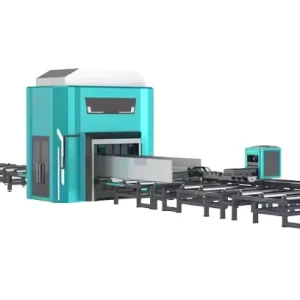
Civil engineering and structural steel fabrication rely on high-precision beam profiling. Traditional band-saw cutting and manual drilling of H-beams, channel sections, and gusset plates are slow, inaccurate, and labor-intensive. High-power robotic laser systems execute cross-sectional profiles and bolt-hole arrays in seconds, directly from 3D CAD files.
With major automotive production centers throughout the Midwest, tier-1 suppliers face immense pressure to produce lightweight, high-strength steel parts. Hydroformed tubes and thermoformed components must be trimmed with sub-millimeter precision. A multi-axis robotic laser cell is the only reliable solution for cutting high-tensile parts without tool wear or thermal distortion.
Chicago's job shops require flexible automation. A machine dedicated to a single part geometry represents a capital bottleneck. Our robotic laser cutting workstations handle rapid changeovers between sheet metal parts, thick structural plates, and tubular assemblies with a simple program swap.
Global laser development has shifted rapidly towards fiber delivery systems. Emitting at a wavelength of approximately 1.06 micrometers, fiber lasers achieve energy absorption rates in metals that are up to three times higher than traditional CO2 lasers. This allows manufacturers to utilize lower raw power inputs while achieving higher cutting speeds, particularly when working with highly reflective materials such as aluminum, copper, and brass.
The integration of artificial intelligence in robotic toolpath generation represents a major step forward. Modern offline programming (OLP) software analyzes complex CAD geometries and automatically optimizes the 6-axis articulation paths to avoid kinematic singularities, joint limits, and collisions. This reduces programming overhead from days to minutes.
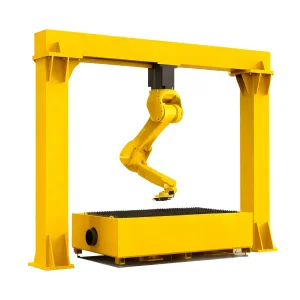
By mounting a 6-axis articulated robot on an auxiliary linear track (creating a 7-axis system), the processing window increases exponentially. This system allows for the seamless cutting of extremely long workpieces, such as crane booms or commercial structural columns, without repositioning the part, ensuring perfect spatial alignment across the entire length of the workpiece.
Intelligent laser heads equipped with optical height sensors and capacitive tracking adjust the nozzle distance in real time. This compensates for material variations, surface irregularities, and thermal expansion, maintaining a consistent focus point and kerf width throughout the entire cutting process.
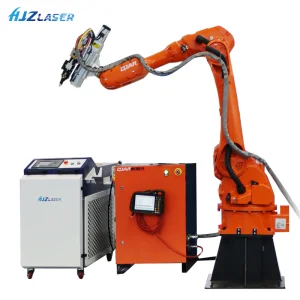
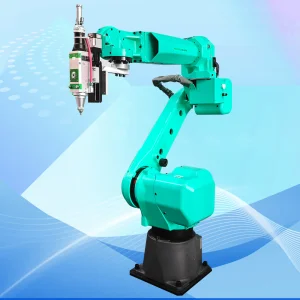
As laser power sources exceed 12kW and industrial robot speeds improve, the future of materials processing is clear. Manufacturers who adopt these technologies early will establish significant advantages in output quality and operational cost.
Integration of CAD files directly with the robot controller. Offline programming (OLP) eliminates teach-pendant operations, allowing work stations to run production while programmers build the next run offline.
Dual-purpose robotic cells equipped with automated quick-change heads. The same robotic arm can switch from 3D bevel cutting to deep-penetration laser welding within a single production sequence.
AI agents monitoring laser plume intensity, thermal signatures, and back-reflection to adjust feed rate, assist gas pressure, and laser modulation on-the-fly, ensuring near-zero defect runs.
Compare core technical configurations to determine the ideal system for your Chicago production facility:
| System Configuration | Laser Source Power | Kinematic Reach / Envelope | Repeatability (ISO 9283) | Primary Applications |
|---|---|---|---|---|
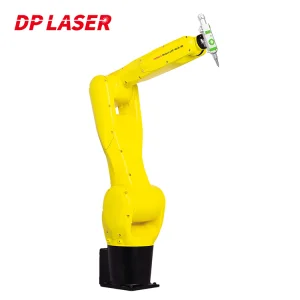
| 6-Axis Articulated Robot Arm | 1000W - 3000W Fiber | 1,800mm - 2,200mm radius | ±0.05 mm | Automotive chassis components, hydroformed tube cutting, curved metal panels |
| 7-Axis Linear Track System | 3000W - 8000W Fiber | Custom length tracks up to 12m | ±0.08 mm | Structural H-beams, chassis rails, aerospace frames, logistics columns |
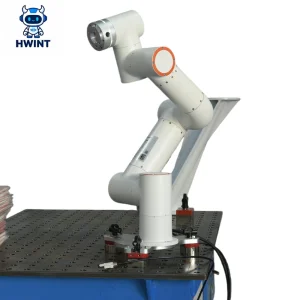
| Collaborative Robot (Cobot) Laser Cell | 1000W - 2000W Fiber | 900mm - 1,300mm radius | ±0.03 mm | High-mix low-volume parts, medical devices, small sheet-metal assemblies |
| Hybrid Robotic Cutting & Welding Workstation | 1500W - 4000W Fiber | Dual-zone customized enclosures | ±0.05 mm | Contract manufacturing, job shops, enclosure construction, agricultural parts |
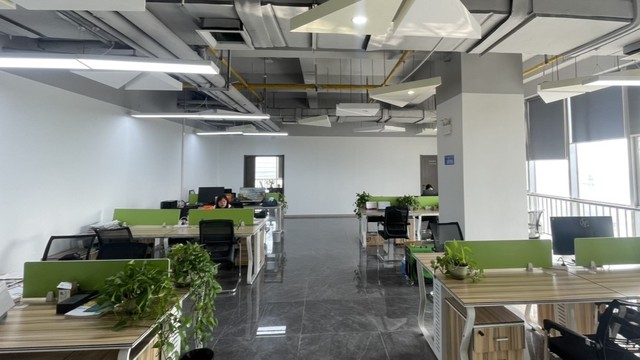
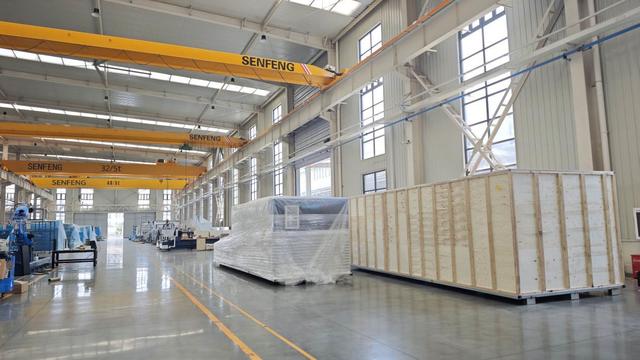
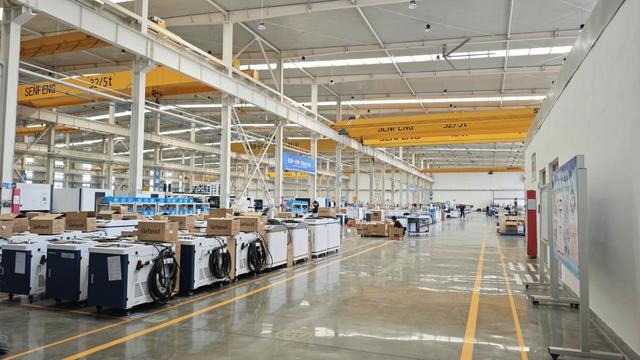
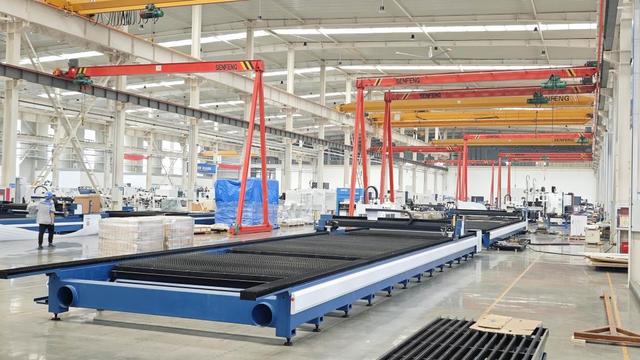
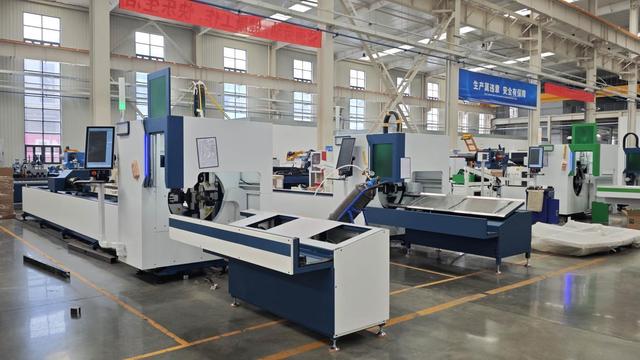
Shanghai Datum Machine Co., Ltd. is a professional China automation laser cutting manufacturer specializing in fiber laser cutting systems, CNC cutting solutions, and smart manufacturing equipment for global industrial customers. With extensive experience in advanced manufacturing technologies, we are dedicated to providing high-performance automation solutions that improve productivity, precision, and operational efficiency across a wide range of industries.
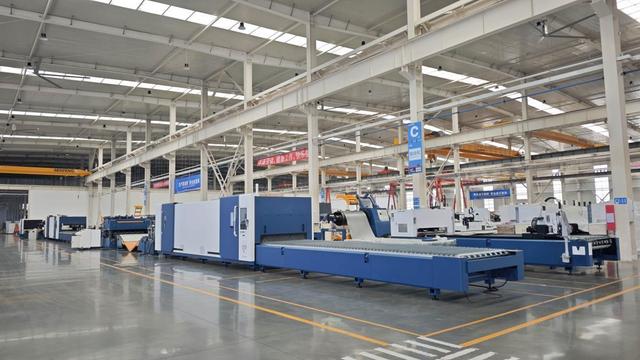
Our product portfolio includes fiber laser cutting systems, CNC laser cutting equipment, tube laser cutting machines, sheet metal processing solutions, robotic laser cutting systems, automated loading and unloading systems, laser production lines, and customized manufacturing automation solutions. Designed to meet the evolving demands of modern factories, our equipment delivers exceptional cutting accuracy, high-speed performance, reduced material waste, and reliable long-term operation.
At Datum Machine, innovation is at the center of our development strategy. Our engineering team continuously integrates intelligent control technologies, automation systems, and advanced manufacturing concepts to help customers build more efficient and flexible production environments. From standalone laser cutting equipment to fully integrated smart factory solutions, we provide comprehensive support tailored to each customer's production requirements.
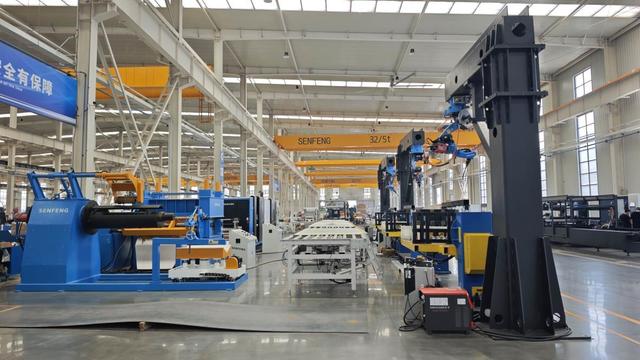
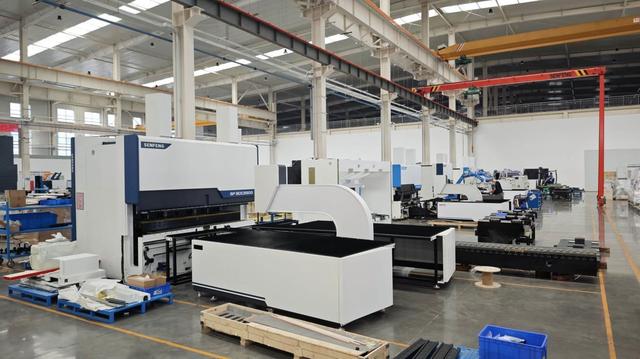
Quality and reliability are fundamental to our manufacturing philosophy. We maintain strict quality control procedures throughout design, production, testing, and delivery to ensure every system meets international performance and safety standards. Our modern manufacturing facilities and experienced technical team enable us to provide consistent quality and dependable service for customers worldwide.
Serving clients across automotive, metal fabrication, machinery manufacturing, construction, aerospace, electronics, and industrial processing sectors, Shanghai Datum Machine Co., Ltd. has established a strong reputation for advanced technology, customized solutions, and responsive customer support. We are committed to becoming a trusted global partner in automation laser cutting, helping manufacturers achieve higher efficiency, smarter production, and sustainable growth through innovative laser processing technologies.