Datum Machine
Datum Machine
Datum Machine
Engineered for immediate deployment into heavy structural fab shops, mining equipment manufacture, and high-precision contract processing.
The Australian manufacturing landscape is currently undergoing its most profound structural shift since the mid-20th century. With the strategic winding down of domestic high-volume passenger automotive assembly, the industrial sector has aggressively pivoted toward high-value, specialized, low-volume/high-mix fabrication. Today, the core drivers of Australian industrial growth are sovereign defense capabilities, advanced agricultural equipment manufacturing, resource extraction (mining equipment, technology, and services - METS), and complex infrastructure development.
In this high-cost labor environment, traditional manual metal fabrication and processing techniques act as key productivity bottlenecks. Conventional manual cutting, sawing, and drilling of complex profiles (like H-beams, hollow structural sections, and three-dimensional pressed components) require massive labor overhead, lengthy setup times, and introduce significant human error. By integrating robotic laser cutting systems, Australian factories are achieving unprecedented levels of efficiency, cost-competitiveness, and sovereign self-reliance.
Simultaneously, global megatrends in Industry 4.0, carbon-neutral manufacturing, and supply chain reshoring are putting immense pressure on localized factories. To survive, Australian businesses must match the production quality and cost curves of highly automated European and Asian competitors. The solution lies in marrying the precision of high-power fiber lasers with the versatile articulation of 6-axis and 7-axis industrial robotic arms, bringing true flexibility directly to the workshop floor.
Exploring the physics of fiber-optic delivery, robotic joint configuration, and localized automation architectures.
Unlike carbon dioxide (CO2) laser systems, fiber lasers transmit high-intensity beam light via a specialized active optical fiber directly to the cutting head. Featuring wavelengths of approximately 1.07 microns, fiber lasers exhibit absorption rates in metals that are up to ten times greater than those of gas lasers. This ensures extremely fast cut cycles through mild steel, stainless steel, aluminum, brass, and copper while using far less electrical power, lowering overhead for Australian factories.
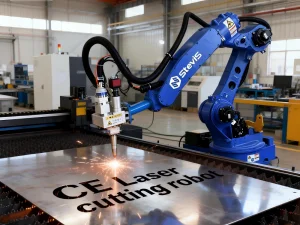
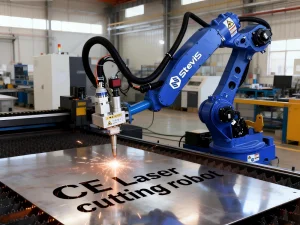
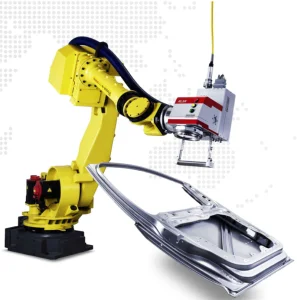
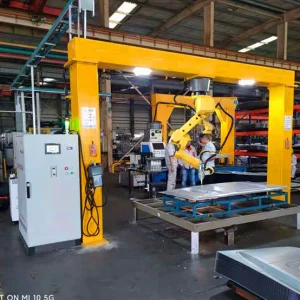
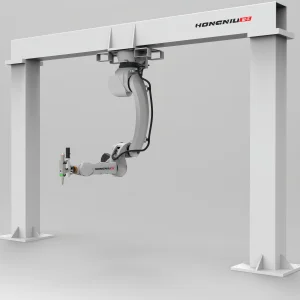
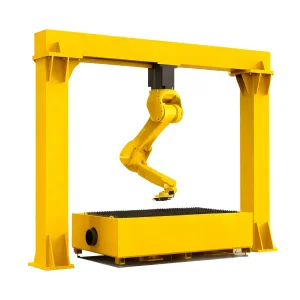
Traditional Cartesian-style (gantry) laser cutters are structurally confined to flat-sheet, 2D planar envelopes. When handling curved profiles, pressed vehicle sections, or pre-welded structures, a multi-axis articulated arm (such as standard 6-axis configurations or advanced 7-axis robotic tracks) is mandatory. The arm manipulates the laser head around the part with sub-millimeter precision, performing beveled cuts and compound angles in a single process.
Modern job shops require fluid data pipelines. Shanghai Datum Machine's proprietary robotic software natively supports major file output types (such as AI, LAS, DXF, and BMP). This feature circumvents the laborious process of manual point-to-point robot programming. The offline software calculates optimal approach vectors, cut speeds, gas pressure thresholds, and collision avoidance algorithms directly from standard 3D CAD files.
The operational context of Australian industrial settings is unique. Factories here face low-density population centers, long transport routes, and a highly competitive local labor market. Consequently, capital equipment must be highly reliable, autonomous, and multi-functional. Shanghai Datum Machine Co., Ltd. has developed specialized solutions targeting key Australian industries:
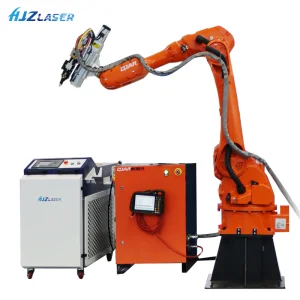
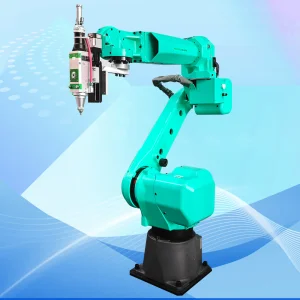
The extraction of iron ore, coal, and critical minerals demands ultra-heavy duty earthmoving machinery. Draglines, bucket excavators, and underground haulers utilize thick, high-yield wear plates (such as Hardox). The Professional 6-Axis Fiber Laser Cutter Robot delivers precise, clean bevels on thick plates, preparing them for structural welding without requiring secondary milling or manual cleanup.
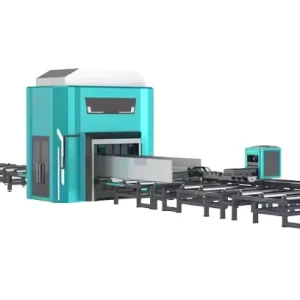
Commercial building construction and public transit infrastructure projects rely heavily on H-beams, structural channels, and hollow structural sections. Conventional methods require manual layout marking, drill presses, and bandsaw setups. The Steel Metal H-Beam Laser Cutting Machine automates these tasks. It cuts connection holes, slot welds, and customized bevels in a single continuous automated run, dramatically reducing production times for steel fabrication shops.
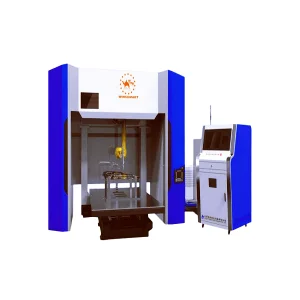
With massive naval shipbuilding projects in Adelaide and aerospace component manufacturing in Melbourne, defense compliance standards are extremely strict. Precision tolerances are critical. The integrated 7-axis robotic workstations with closed-loop optical sensors provide high precision and traceability, meeting the rigorous standards of naval and defense supply chains.
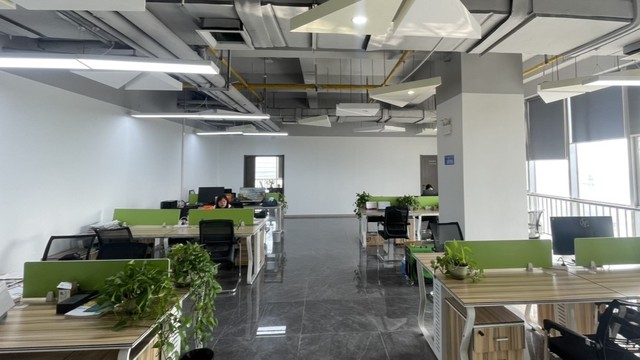
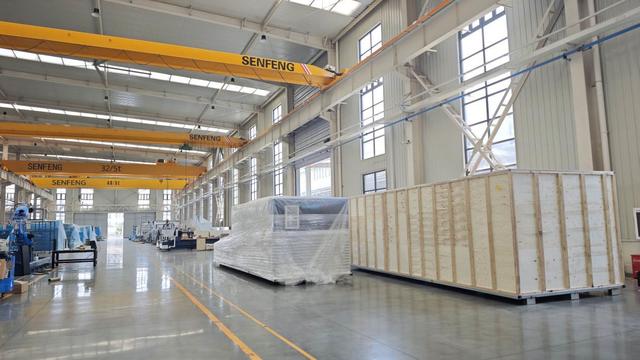
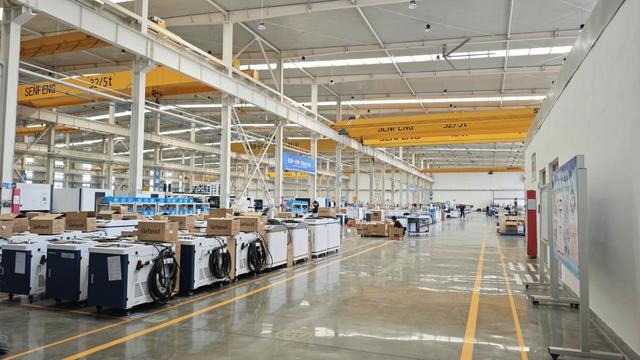
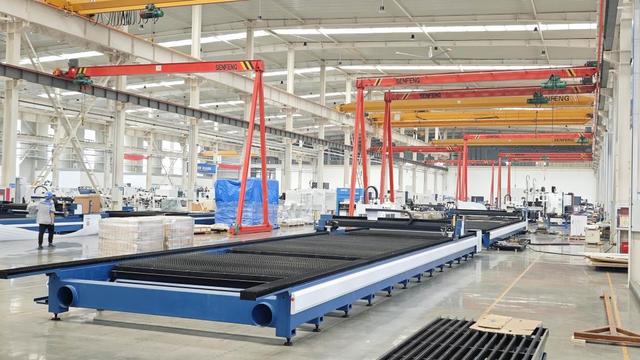
Shanghai Datum Machine operates advanced fabrication and testing centers, ensuring that every machine shipped globally meets strict quality and safety criteria.
Integrating cutting-edge AI networks, multi-axis hardware kinematics, and sustainable green manufacturing standards.
By using optical sensors and infrared thermal cameras directly on the robotic nozzle, systems can monitor key parameters like width, slag formation, and focus offset in real-time. If the system detects a deviation, the AI-driven controller automatically adjusts the cutting feedrate and auxiliary gas pressure on the fly, preventing bad cuts and reducing scrap.
Future setups will merge multiple processes into a single workstation. Dual-purpose robotic cells (like the 7-Axis Automatic Cutting & Welding System) can switch between fiber laser cutting, high-penetration laser welding, and cladding without unloading the workpiece. This approach saves floor space and minimizes part handling.
By building virtual models (digital twins) of your factory's robotic systems, offline CAD programming can be accurately verified in a digital environment before running the physical machine. This completely eliminates collision risks, calculates cycle times to the second, and schedules preventive maintenance based on real-world wear data.
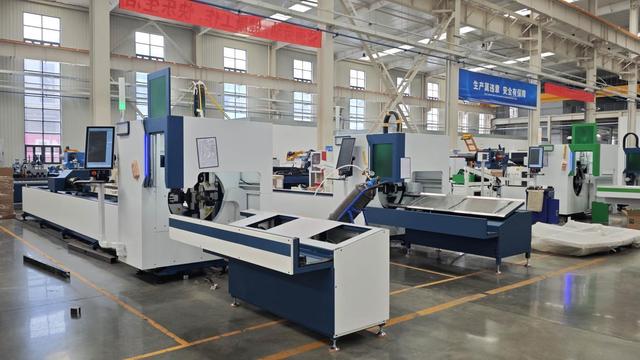
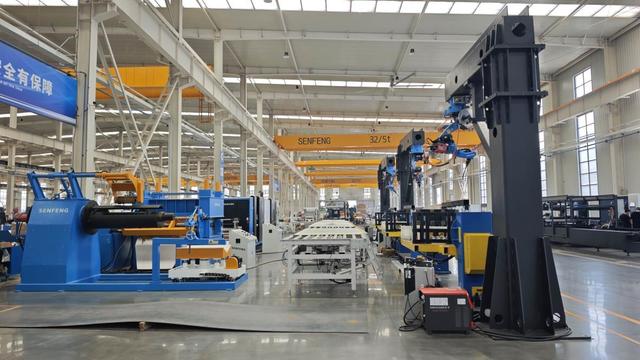
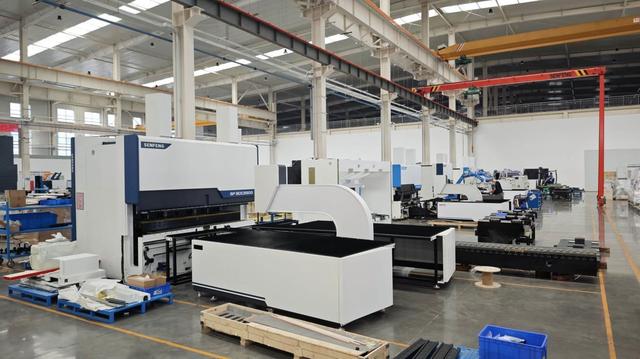
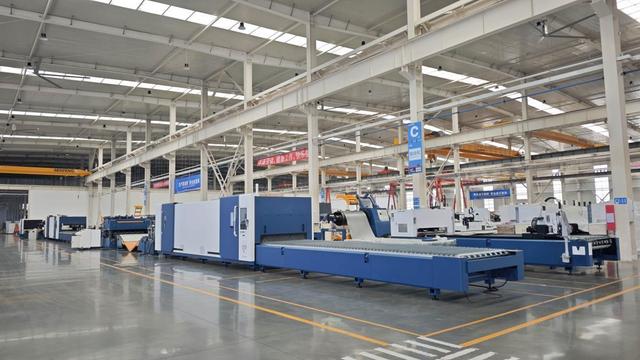
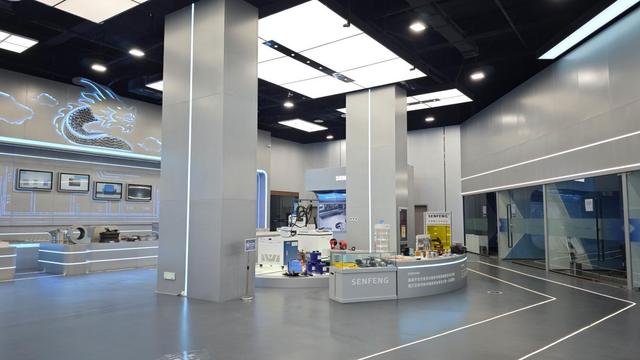
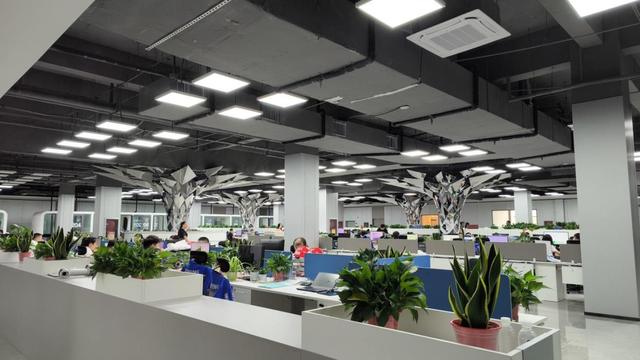
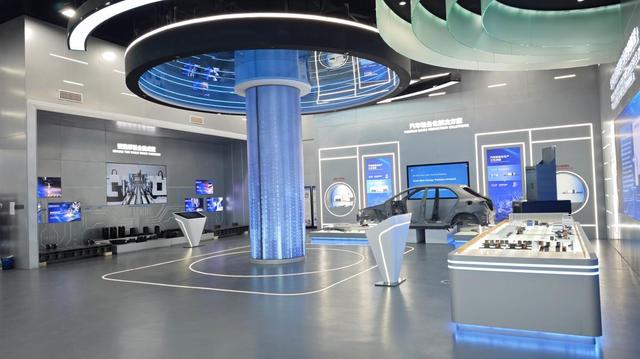
Shanghai Datum Machine Co., Ltd. is a professional China automation laser cutting manufacturer specializing in fiber laser cutting systems, CNC cutting solutions, and smart manufacturing equipment for global industrial customers. With extensive experience in advanced manufacturing technologies, we are dedicated to providing high-performance automation solutions that improve productivity, precision, and operational efficiency across a wide range of industries.
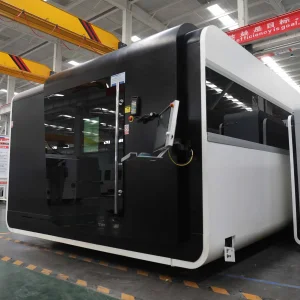
Our product portfolio includes fiber laser cutting systems, CNC laser cutting equipment, tube laser cutting machines, sheet metal processing solutions, robotic laser cutting systems, automated loading and unloading systems, laser production lines, and customized manufacturing automation solutions. Designed to meet the evolving demands of modern factories, our equipment delivers exceptional cutting accuracy, high-speed performance, reduced material waste, and reliable long-term operation.
At Datum Machine, innovation is at the center of our development strategy. Our engineering team continuously integrates intelligent control technologies, automation systems, and advanced manufacturing concepts to help customers build more efficient and flexible production environments. From standalone laser cutting equipment to fully integrated smart factory solutions, we provide comprehensive support tailored to each customer's production requirements.
Quality and reliability are fundamental to our manufacturing philosophy. We maintain strict quality control procedures throughout design, production, testing, and delivery to ensure every system meets international performance and safety standards. Our modern manufacturing facilities and experienced technical team enable us to provide consistent quality and dependable service for customers worldwide.
Serving clients across automotive, metal fabrication, machinery manufacturing, construction, aerospace, electronics, and industrial processing sectors, Shanghai Datum Machine Co., Ltd. has established a strong reputation for advanced technology, customized solutions, and responsive customer support. We are committed to becoming a trusted global partner in automation laser cutting, helping manufacturers achieve higher efficiency, smarter production, and sustainable growth through innovative laser processing technologies.
Expert answers regarding investment costs, installation processes, technical specifications, and safety guidelines for the Australian market.
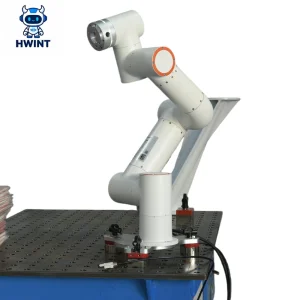
Explore our full line of multi-axis fiber lasers, robotic welding assemblies, and collaborative configurations.
Partner with Shanghai Datum Machine Co., Ltd. for reliable, high-precision robotic laser systems designed for the demanding requirements of the Australian market.
Send Inquiry Now