Datum Machine
Datum Machine
Datum Machine
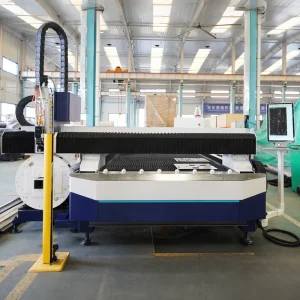
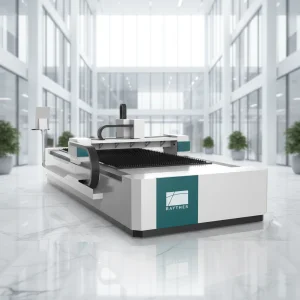
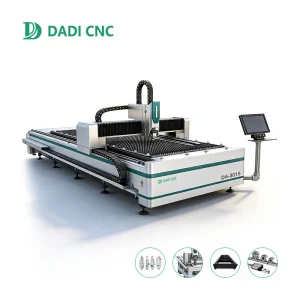
Explore our premium selection of industrial CNC fiber laser systems engineered to cut complex shapes, custom metal frames, and channel letters with extreme edge precision.
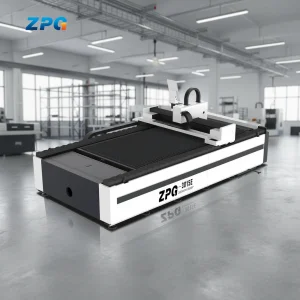
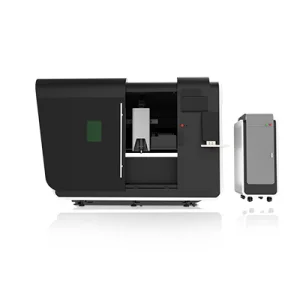
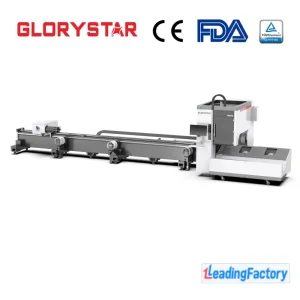
The global signage industry has undergone a radical paradigm shift over the past decade. Traditional manual routing, mechanical punching, and CO₂ gas tube lasers have rapidly evolved into high-performance CNC Fiber Laser Cutting systems. Architectural developments, corporate rebranding demands, and massive infrastructure upgrades worldwide have pushed signage fabrication to new heights.
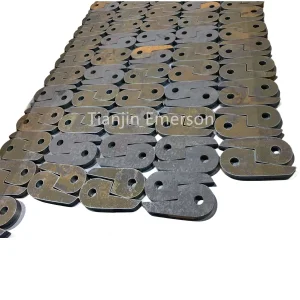
Today, signs are no longer just flat visual boards; they are complex, multi-material assemblies integrating 3D dimensional lettering, intricate backlighting, and weather-resistant structural components. Modern signage requires precise profiling of various metals such as:
The strict design tolerances (often requiring accuracy down to ±0.05mm) make optical CNC fiber lasers the premier fabrication method. The minimal kerf width, narrow heat-affected zone (HAZ), and smooth post-cut edge profiles drastically reduce secondary grinding operations, which translates directly to shorter manufacturing lead times.
Information Gain Insight: While traditional mechanical routers often produce microscopic burrs and stress fractures in thin sheet metals, fiber lasers use high-intensity energy density (1.06-micron wavelength) to vaporize material instantly. This yields a clean, paint-ready edge that is vital for exterior signage exposed to extreme weather changes.
Unparalleled supply chain ecosystem, optimized raw materials, and smart automation machinery.
China's dominance in the laser cutting manufacturing space is not simply built on cheap labor; it is founded on the complete integration of the industrial supply chain. In regions like Jinan and Shanghai, complete ecosystems containing laser source manufacturers (like Raycus and Maxphotonics), precision rack-and-pinion suppliers, and high-performance servo motor developers work in close proximity. This results in rapid technological iterations and immediate access to spare parts.
Furthermore, Chinese laser cutting systems are designed for high compatibility. By leveraging standardized professional nesting software like CypCut, global fabricators can easily import complex vector layouts directly from CAD tools. This streamlines workflow transition from 2D architectural mockups directly to finished, physical cut products.
The path forward for architectural branding, digital display frameworks, and modern wayfinding.
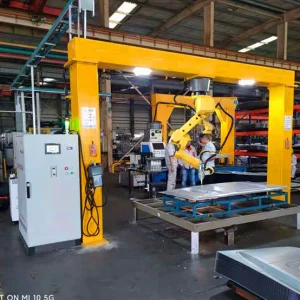
The transition from 2D sheet profiling to complex 3D structures. Our 7-Axis robotic systems enable automatic cutting and welding of irregular, organic-shaped channel letters and dome sign enclosures in one unified workflow.
Real-time nesting algorithms analyze cut paths to utilize every millimeter of metal sheet. This reduces material wastage by up to 15%, a crucial operational advantage when processing expensive materials like brass and titanium.
Advanced dust and smoke extraction manifolds paired with fiber lasers consume less power than CO₂ systems, ensuring production units remain fully compliant with strict municipal EPA and OSHA air safety regulations.
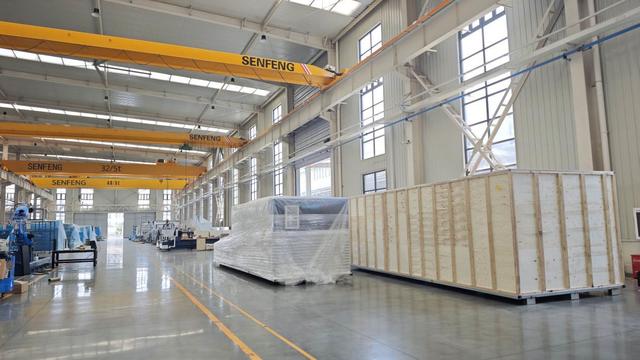
When international procurement managers evaluate potential Chinese manufacturers for laser equipment, their priorities extend far beyond the initial equipment cost. Reliability, component traceability, and ongoing after-sales technical support form the cornerstone of successful long-term partnerships.
Industry-best practices demand compliance with the following metrics:
Your Premier China Automation Laser Cutting Manufacturer
Shanghai Datum Machine Co., Ltd. is a professional China automation laser cutting manufacturer specializing in fiber laser cutting systems, CNC cutting solutions, and smart manufacturing equipment for global industrial customers. With extensive experience in advanced manufacturing technologies, we are dedicated to providing high-performance automation solutions that improve productivity, precision, and operational efficiency across a wide range of industries.
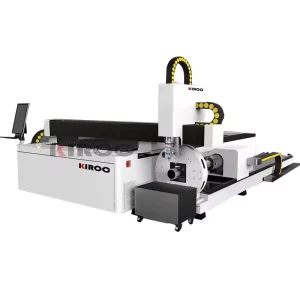
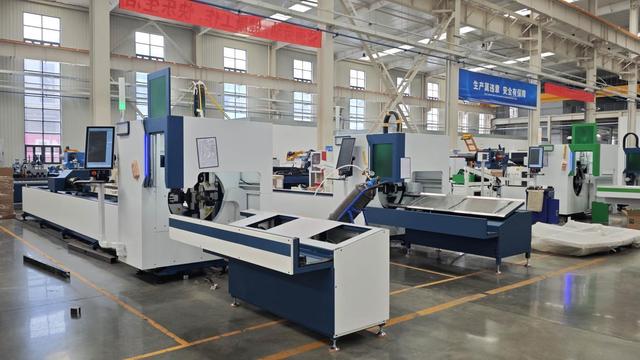
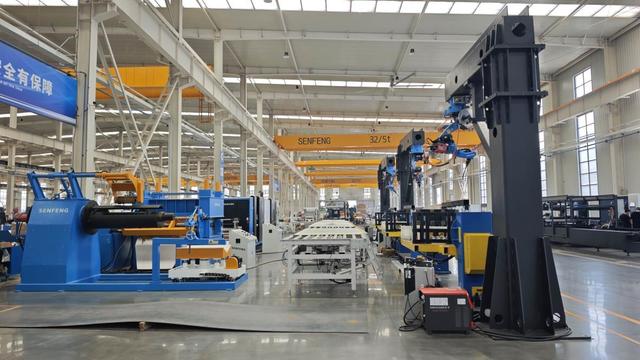
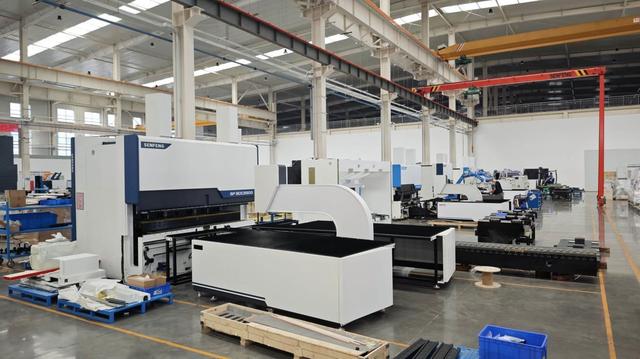
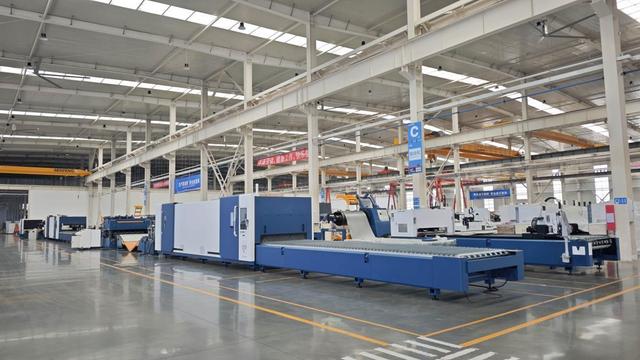
Our product portfolio includes fiber laser cutting systems, CNC laser cutting equipment, tube laser cutting machines, sheet metal processing solutions, robotic laser cutting systems, automated loading and unloading systems, laser production lines, and customized manufacturing automation solutions. Designed to meet the evolving demands of modern factories, our equipment delivers exceptional cutting accuracy, high-speed performance, reduced material waste, and reliable long-term operation.
At Datum Machine, innovation is at the center of our development strategy. Our engineering team continuously integrates intelligent control technologies, automation systems, and advanced manufacturing concepts to help customers build more efficient and flexible production environments. From standalone laser cutting equipment to fully integrated smart factory solutions, we provide comprehensive support tailored to each customer's production requirements.
Quality and reliability are fundamental to our manufacturing philosophy. We maintain strict quality control procedures throughout design, production, testing, and delivery to ensure every system meets international performance and safety standards. Our modern manufacturing facilities and experienced technical team enable us to provide consistent quality and dependable service for customers worldwide.
Serving clients across automotive, metal fabrication, machinery manufacturing, construction, aerospace, electronics, and industrial processing sectors, Shanghai Datum Machine Co., Ltd. has established a strong reputation for advanced technology, customized solutions, and responsive customer support. We are committed to becoming a trusted global partner in automation laser cutting, helping manufacturers achieve higher efficiency, smarter production, and sustainable growth through innovative laser processing technologies.
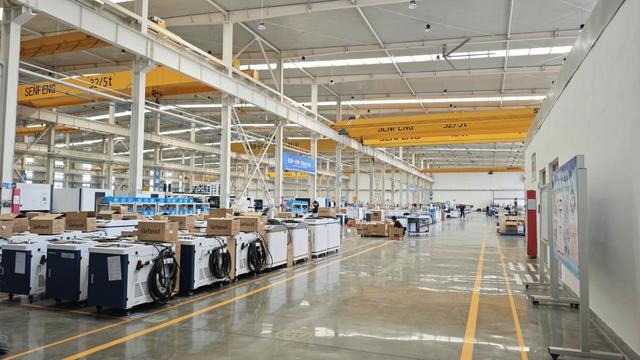
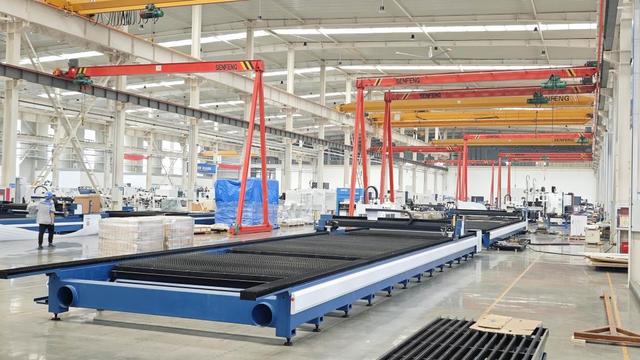
Expert technical answers to critical sourcing and processing questions.
Fiber lasers operate at a wavelength of approximately 1.06 microns, which is absorbed far more efficiently by metals (especially highly reflective metals like aluminum, brass, and copper) compared to the 10.6-micron wavelength of CO₂ lasers. This allows fiber systems to cut metal sheets 2 to 3 times faster at equivalent power inputs, with much lower electrical consumption, zero maintenance reflective mirrors, and significantly reduced operating costs.
For standard architectural letter signage (which generally utilizes 1mm to 3mm stainless steel or aluminum), a 1500W to 2000W fiber laser cutter is highly efficient. However, if your workshop fabricates large structural pylons, heavy billboard brackets, or thick mild steel baseplates (10mm to 20mm), a 3000W to 6000W system is recommended. Higher power allows for continuous clean processing using compressed air or nitrogen as assist gases.
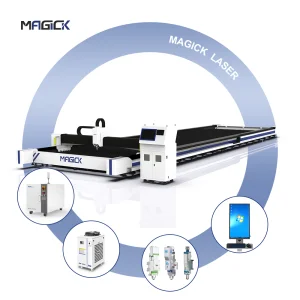
Precision is guaranteed through three core engineering standards: First, our frames undergo stress-relief tempering to eliminate micro-distortions under high heat. Second, we integrate high-end Japanese helical rack-and-pinion drive systems paired with Yaskawa servo motors. Finally, we use professional CNC fiber heads (like Raytools) featuring auto-focus sensors that dynamically adapt to any slight unevenness in the sheet metal.
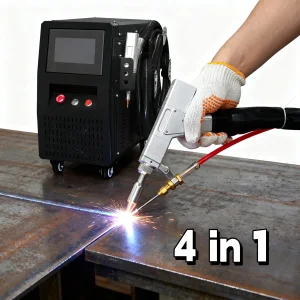
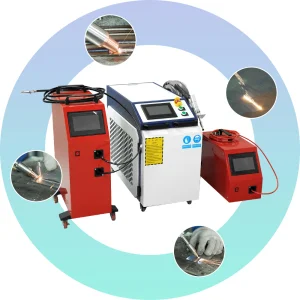
Our 4-in-1 systems (welding, cutting, cleaning, and weld-seam cleaning) are game-changers for on-site installers and custom signage shops. A single operator can use the handheld torch to cut custom metal mounting clips, weld the internal frames of 3D channel letters, clean rust or paint coatings off metal plates, and clean post-weld oxide layers. Its compact air-cooled layout means it can easily be transported directly to the job site.
The choice of assist gas is critical: cutting with Nitrogen (N₂) yields a shiny, oxide-free edge because it is an inert gas that simply expels the molten metal. This is essential for signage that needs direct painting or powder coating without secondary acid-washing. Oxygen (O₂) acts as an active cutting agent to speed up thick carbon steel cuts, but it leaves a dark oxide scale. High-pressure compressed air is a highly cost-efficient alternative for thin sheets when cutting speed is the primary focus.
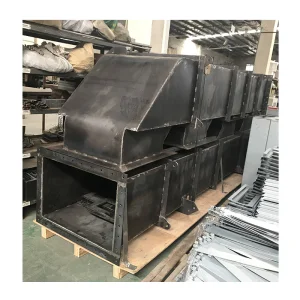
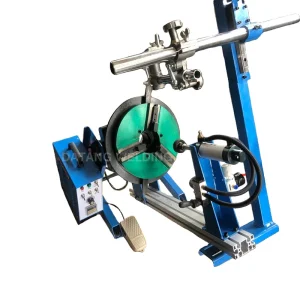
Advanced CNC equipment built for heavy-duty metal profiling, structural steel tube fabrication, and robotic tooling.