Datum Machine Datum Machine

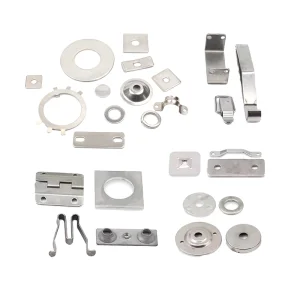
Top China Sheet Metal Processing Manufacturers & Exporter

The Comprehensive Industry Whitepaper on High-Precision Fiber Laser Systems, Automation OEM Fabrication, and Global Supply Standards

Corporate Overview & Market Position

Leading the Vanguard in Smart CNC Sheet Metal Fabrication & Automation

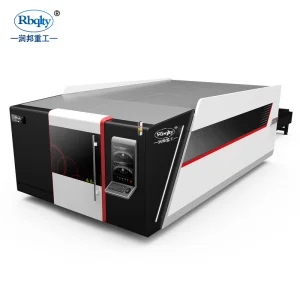
Shanghai Datum Machine Co., Ltd. is a professional China automation laser cutting manufacturer specializing in fiber laser cutting systems, CNC cutting solutions, and smart manufacturing equipment for global industrial customers. With extensive experience in advanced manufacturing technologies, we are dedicated to providing high-performance automation solutions that improve productivity, precision, and operational efficiency across a wide range of industries.

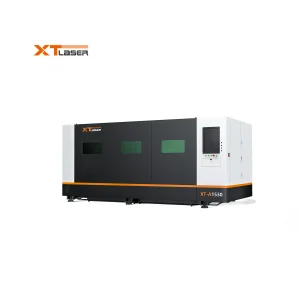
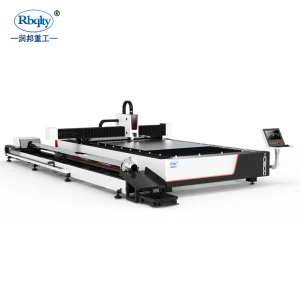
Our product portfolio includes fiber laser cutting systems, CNC laser cutting equipment, tube laser cutting machines, sheet metal processing solutions, robotic laser cutting systems, automated loading and unloading systems, laser production lines, and customized manufacturing automation solutions. Designed to meet the evolving demands of modern factories, our equipment delivers exceptional cutting accuracy, high-speed performance, reduced material waste, and reliable long-term operation.

At Datum Machine, innovation is at the center of our development strategy. Our engineering team continuously integrates intelligent control technologies, automation systems, and advanced manufacturing concepts to help customers build more efficient and flexible production environments. From standalone laser cutting equipment to fully integrated smart factory solutions, we provide comprehensive support tailored to each customer's production requirements.

Quality and reliability are fundamental to our manufacturing philosophy. We maintain strict quality control procedures throughout design, production, testing, and delivery to ensure every system meets international performance and safety standards. Our modern manufacturing facilities and experienced technical team enable us to provide consistent quality and dependable service for customers worldwide.

Serving clients across automotive, metal fabrication, machinery manufacturing, construction, aerospace, electronics, and industrial processing sectors, Shanghai Datum Machine Co., Ltd. has established a strong reputation for advanced technology, customized solutions, and responsive customer support. We are committed to becoming a trusted global partner in automation laser cutting, helping manufacturers achieve higher efficiency, smarter production, and sustainable growth through innovative laser processing technologies.

±0.03mm
Cutting Accuracy
100+
Export Destinations
24/7
Technical Support
ISO9001
Certified Quality

Global Technological Trends in Sheet Metal Processing

Analyzing key paradigm shifts shaping efficiency, cost structures, and throughput in high-precision manufacturing.

Ultra-High Power Fiber Lasers

Transitioning from CO2 systems to high-efficiency fiber laser architectures. Modern 10kW to 40kW fiber systems yield unmatched cutting speeds on medium-to-thick carbon and stainless steel sections, lowering electricity overheads while reducing edge roughness.

Closed-Loop Automation & AI Nesting

By coupling automatic loading/unloading towers with real-time nesting algorithms, modern processing environments achieve near-zero material scrap ratios. Intelligent software dynamic paths reduce cycles and adaptively correct mechanical thermal distortions.

Multi-Axis Linkage Robotic Systems

Traditional 2D sheet processing has advanced to embrace 6-axis 3D laser cutting and complex structural tube profiling. Robot-guided heads execute precise welding, deburring, and surface finishing directly within a unified cellular workspace.

Navigating Global Sourcing and Procurement Challenges

Procuring sheet metal equipment and custom components from China demands rigorous attention to mechanical tolerance, certifications, and reliability metrics. Industry buyers evaluate key standards such as:

  • Strict Mechanical Repeatability: Ensuring CNC gantry systems sustain positioning accuracies of ≤ ±0.03 mm under sustained thermal loading.
  • Material Certification Traceability: Guaranteed tracking of high-grade raw alloys, stainless steel, and aerospace-compliant aluminum profiles.
  • CE, UL, and FDA Standards Compliance: Absolute integration of interlocked safety enclosures, light curtains, and certified laser emitter housings.
  • Modular Design: Facilitating rapid component replacements (chillers, laser heads, power supplies) minimizing localized downtime.

Optimized Sourcing Checklist

For engineering directors and supply chain managers establishing global contracts:

1. Assess Laser Medium Duty Cycles

Inquire about continuous 24-hour operation heat dissipation capacities on fiber laser resonators.

2. Interface Integration Protocols

Ensure compliance with mainstream IPC communication channels, such as Modbus, EtherCAT, and PROFIBUS.

3. Component Sourcing Transparency

Verify linear guide and controller brands (e.g., Hiwin rails, Cypcut control software) to guarantee part availability.

Macro-Industry Processing & Custom Solutions

Tailoring laser optics, mechanical systems, and software pipelines to vertical industrial demands.

Automotive Manufacturing

Automobile chassis, pillars, and door structures demand rapid, burr-free cuts. Modern 3D multi-axis robotic laser arms enable localized thermal processing of high-strength boron steel without altering mechanical tempering qualities.

Aerospace Engineering

Aluminum and titanium alloys require highly specific processing regimes. Precise cooling-gas ratios (Nitrogen/Argon) combined with custom software algorithms eliminate oxidation layers, optimizing components for critical flight stresses.

Construction & Infrastructure

From architectural facade panels to structural beam junctions, heavy tube laser processing and heavy-duty 3D welding tables assure component dimensions, guaranteeing seamless assembly on structural construction sites.

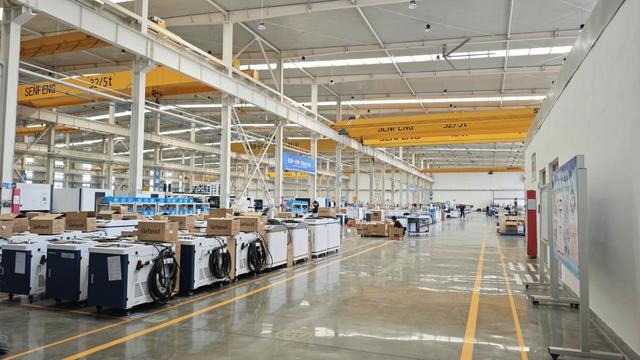
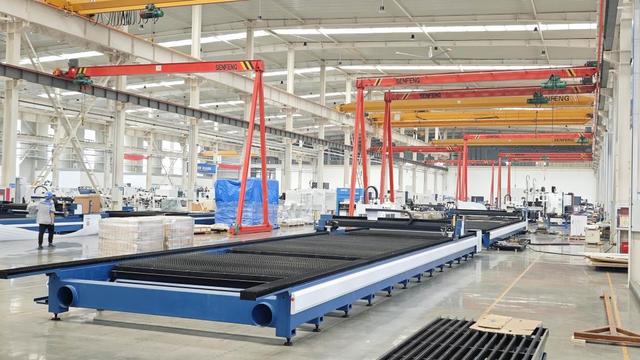
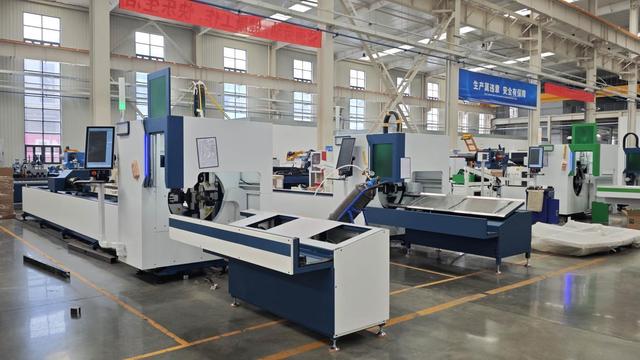
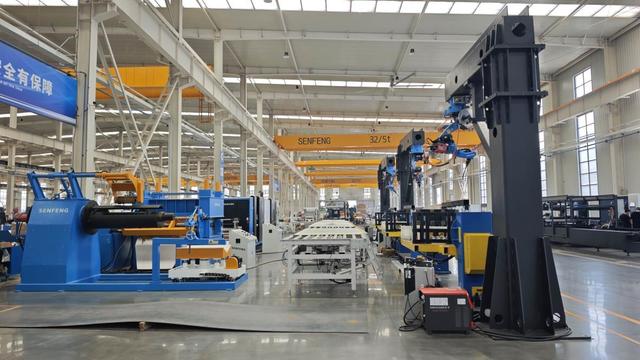
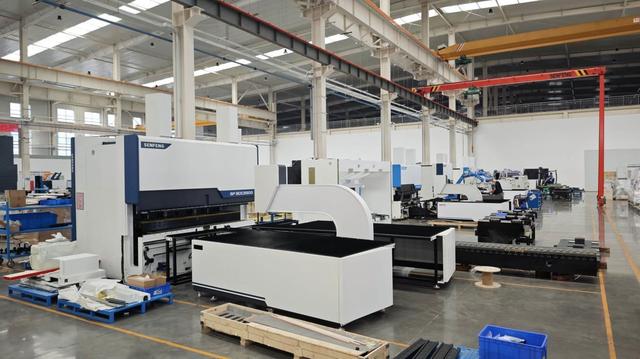
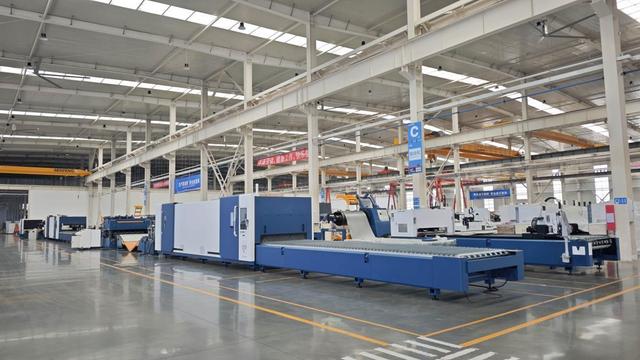
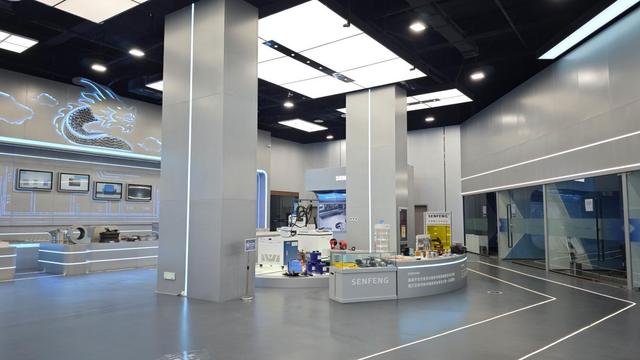
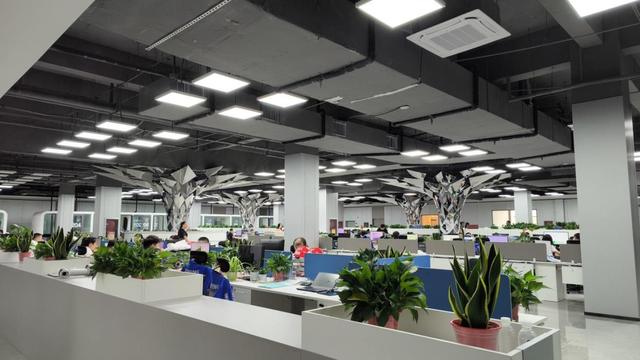
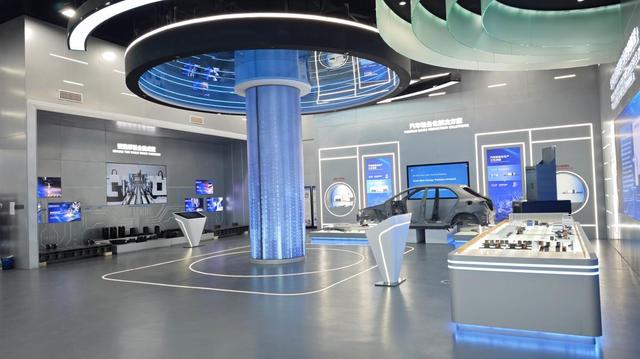
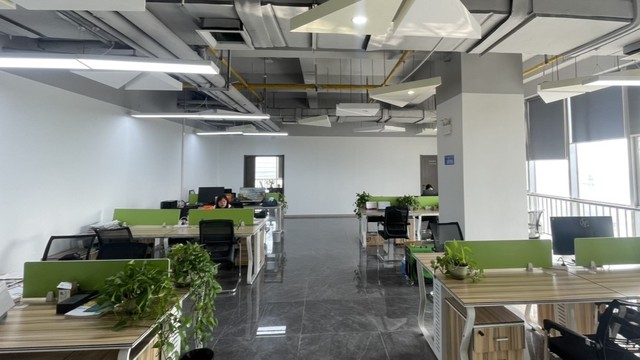
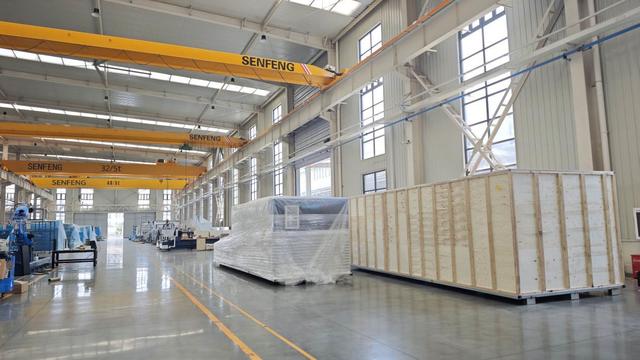
Shanghai Datum Machine Production Facilities

Explore our advanced production lines, quality inspection units, assembly stages, and manufacturing floor.
Localization, Compliance & Global Support Networks

Deploying CNC fiber laser machinery internationally requires robust localized service networks and safety compliance. Shanghai Datum Machine ensures smooth global deployment by providing:

  • Localized Commissioning Teams: Factory-trained service engineers deployed worldwide for installation, optical alignment, and mechanical tuning.
  • Preventative Maintenance Training: Structured on-site tutorials for operating staff concerning lens cleaning, focal positioning, and gas-ratio tuning.
  • Rapid Spare Parts Supply: Strategically situated distribution centers for immediate shipping of ceramic nozzles, protective windows, and control relays.

Technical Roadmap & Future Outlook (2025-2030)

The next decade of sheet metal processing is anchored in cognitive automation and structural optimization. The Shanghai Datum development team is currently focusing on three key technology pillars:

1. AI-Powered Adaptive Piercing Using real-time optical acoustic sensors to monitor penetration progress, automatically dialing back power to prevent back-reflection and micro-cracking in sensitive alloys.
2. IoT-Linked Preventive Maintenance Cloud-linked telemetry streams system vibrations, lens temperatures, and axis deviations to prevent failures before they impact throughput.
3. Direct Material Sorting Integration Pairing robotic pick-and-place grippers directly with the nesting software to automatically separate, stack, and tag cut pieces, streamlining post-processing workflows.

Expert Q&A: Key Technical & Procurement Inquiries

Critical, in-depth responses designed to assist industrial engineers and global buyers in making informed decisions.

How does gas selection affect the quality and cost of cutting sheet metal?
The choice between Oxygen (O₂), Nitrogen (N₂), and Compressed Air directly affects the edge quality and processing costs of different sheet metals. Oxygen triggers an exothermic reaction with the steel, generating additional heat that is ideal for cutting thicker carbon steel plates, though it leaves an oxide layer that must be removed before painting. Nitrogen, an inert gas, cools the cut zone and displaces oxygen, preventing oxidation to yield a bright, weld-ready edge on stainless steel and aluminum, though it requires higher pressure and consumption. High-pressure compressed air serves as a highly cost-efficient alternative for medium-to-thin gauges, blending physical ejection with a mild exothermic reaction to cut operating costs by up to 50% compared to pure nitrogen setups.
What features prevent thermal deformation when fabricating reflective metals like aluminum or brass?
Highly reflective alloys present challenges due to back-reflections that can damage the laser source, as well as high thermal conductivity that causes localized warping. To address this, modern fiber lasers feature optical isolators to absorb reflected light safely. On the mechanical side, high-frequency pulsed cutting paths, advanced cooling systems, and specialized nesting software distribute heat evenly. Modulating the laser's power output relative to its speed keeps the heat input consistent, protecting thin materials from warping or bubbling during cutting.
Why is a 3D welding table system critical for high-volume custom production runs?
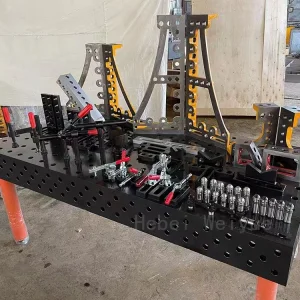
A 3D welding table uses a precise grid of holes (typically D16 or D28 spaced at 50mm or 100mm intervals) alongside matching clamping tools to establish a highly accurate referencing workspace. This setup allows technicians to quickly assemble and secure complex parts without building expensive, single-use jigs. The rigid, heavy table resists warping under intense heat, ensuring consistent welding dimensions and minimizing the risk of warped components during volume runs.
What are the advantages of integrating a 6-axis linkage robotic arm into laser cutting lines?
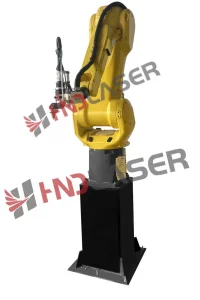
Unlike standard 3-axis flatbed systems, a 6-axis robotic arm moves in three dimensions, allowing it to cut, bevel, and trim complex curved profiles. This is particularly valuable for pre-formed parts, such as stamped automotive body panels or hydroformed aerospace tubes. Real-time vision sensors adjust the robot's path to compensate for physical positioning variations, eliminating the need for manual grinding or secondary trimming steps.
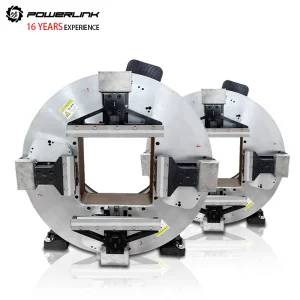
What advantages do pneumatic rotary chucks provide in industrial pipe processing?
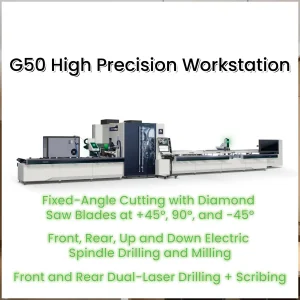
Pneumatic chucks deliver rapid, automatic clamping with self-centering mechanics. This prevents thin tubes from crushing or slipping during high-speed rotation, maintaining consistent center alignment even with out-of-round profiles. These features allow the system to rotate materials quickly and smoothly, minimizing processing vibration and producing clean, accurate cuts.