Datum Machine
Selecting a laser system for factory work is rarely a simple equipment purchase. It is a production decision.
Laser pioneer Theodore Maiman once said, “The laser is a solution looking for a problem.” His warning still matters. The right machine must solve a defined manufacturing need, not merely display impressive power or speed.
This guide explains how to select laser equipment for industrial applications through practical, measurable criteria. Start with the material, thickness, geometry, and required tolerance. Then examine wavelength, output power, pulse duration, beam quality, spot size, and automation compatibility. These details affect cut edges, weld penetration, marking contrast, and cycle time.
Experience on the factory floor also changes the decision. A machine that performs well during a demonstration may struggle with dust, vibration, heat, or frequent material changes. Ask for sample testing using your actual parts. Review repeatability data, maintenance intervals, operator training, and spare-parts availability.
Safety must remain central. Confirm guarding, interlocks, ventilation, emergency controls, and applicable workplace requirements. Reliable suppliers should provide clear documentation and realistic performance limits. Independent testing can reveal weaknesses that marketing language hides.
Total cost deserves attention. Include energy use, consumables, software, service contracts, downtime, and integration work. The cheapest quotation may become the most expensive choice.
A perfect selection process does not exist. Some assumptions will be wrong. That is why this article encourages documented trials, cross-functional review, and honest comparison before approval. The goal is not to buy the strongest laser. It is to choose a dependable system that fits the process, people, budget, and future production demands.
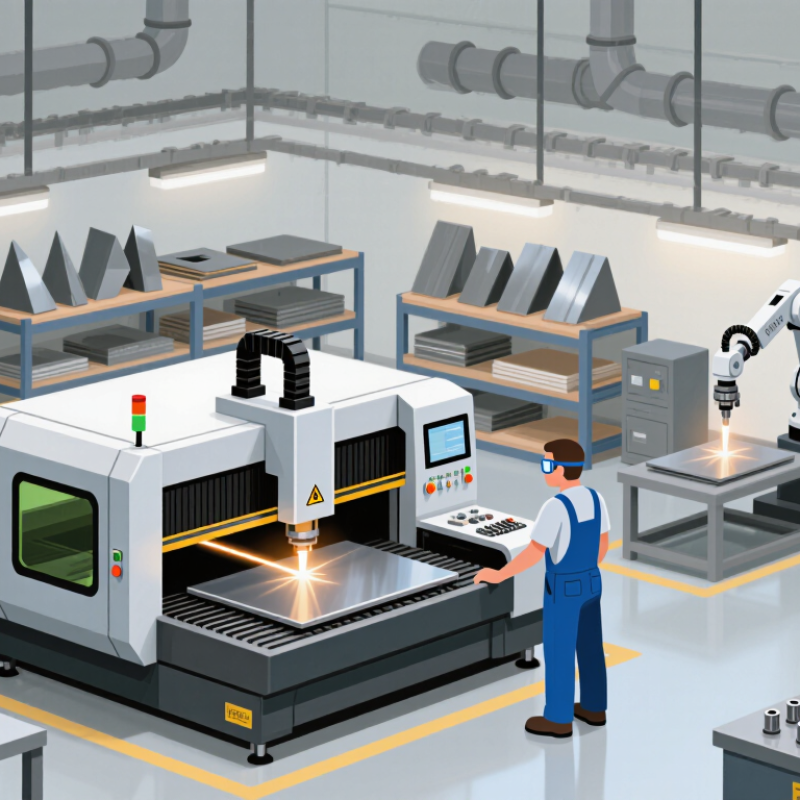
How to Select Laser Equipment for Industrial Applications?
Define the industrial task before comparing laser equipment. Cutting, welding, marking, drilling, and surface cleaning require different laser processes. A machine suited to thin stainless steel may perform poorly on thick aluminum. Material type, thickness, geometry, and surface condition all influence the selection.
Describe the required result in measurable terms. Specify cutting tolerance, edge quality, weld penetration, marking contrast, or acceptable heat-affected zones. Production volume matters too. A prototype line may need flexibility, while continuous manufacturing demands stable speed and repeatable positioning. Review laser wavelength, power, pulse duration, spot size, scanning range, and motion control together. A higher power rating can look attractive, but it may be the wrong answer. In practice, teams sometimes choose equipment before defining the defect they need to prevent.
Tips: Test representative samples, not ideal materials. Record speed, energy settings, cycle time, and failure patterns. Ask qualified technical personnel to verify guarding, ventilation, interlocks, and maintenance access. Require documented test results and clear operating procedures. Small details matter. For example, reflective surfaces may need different optics or process settings. Tight corners can expose weak motion control. Dust, vibration, and temperature changes can also reduce consistency. A short trial may pass, yet longer production testing can reveal focus drift or unstable results. Use those findings to refine the process definition before approving the equipment.
Laser equipment should be selected according to the industrial task, material, production speed, and required process quality. The chart shows indicative average-power ranges commonly used for major industrial laser processes; the final specification also depends on wavelength, beam quality, spot size, automation, and safety requirements.
Selecting industrial laser equipment begins with the material, not the machine catalog. Metals, polymers, ceramics, and coated surfaces absorb wavelengths differently. That difference controls cutting speed, heat input, and surface quality. Test the material first.
A fiber laser often suits reflective metals because its wavelength couples efficiently with many metal surfaces. A shorter wavelength can improve absorption in certain thin materials. However, absorption changes with alloy, finish, temperature, and surface contamination. A shiny aluminum sheet may behave differently from an anodized one. Do not trust a general material chart alone.
For plastics, wavelength selection must consider both absorption and thermal damage. Some polymers melt cleanly, while others discolor or release unwanted fumes. Ceramics may require pulsed energy to limit cracking near the edge. In production trials, measure kerf width, burr height, heat-affected zones, and cycle time. Inspect the first samples after cooling, not immediately. Small changes in focus and pulse duration can alter results. This is where experience matters.
I once saw a promising setup fail because the coating absorbed energy before the base metal did. The laser was powerful enough, but poorly matched. That mistake was avoidable. A reliable selection process compares several wavelengths, power levels, and feed rates on real samples. It should also include operator safety, ventilation, maintenance access, and process monitoring. Perfect predictions are rare. Careful testing remains the stronger decision tool.
Selecting laser equipment for industrial work starts with the process, not the advertised wattage. Higher power can shorten cutting time, but it may increase heat-affected zones and energy use. In production trials, compare penetration, edge quality, and cycle time on your actual material. The 2024 Industrial Laser Market Review by Optech Consulting identifies material processing as the dominant industrial laser application, but market growth does not prove that one power level fits every factory.
Precision depends on beam quality, motion stability, focusing, and calibration. A narrow kerf can reduce waste, yet excessive speed may create dross, taper, or incomplete cuts. Measure dimensional variation across repeated parts. Keep the test realistic. Include loading delays, acceleration, pierce time, and tool changes. The International Federation of Robotics reported 541,302 industrial robot installations worldwide in 2023, showing why laser cells increasingly require dependable automation and repeatability.
Operating requirements deserve equal attention. Check electrical capacity, cooling, extraction, compressed gas, floor loading, and service access before purchase. The U.S. Department of Energy notes that compressed-air systems can consume 10% to 30% of industrial electricity in some facilities. Poor utility planning can erase productivity gains. I would also question optimistic vendor demonstrations. They often use ideal samples, clean optics, and one short run. Request long-duration testing, maintenance records, safety documentation, and measured uptime. A smaller system may win when precision, reliability, and operating cost matter more than maximum power.
A suitable laser system begins with the workpiece, not the catalog. Measure material thickness, surface condition, part size, and required tolerance. A compact system may handle small batches well, while a larger enclosure supports continuous production. Confirm laser power, beam quality, motion accuracy, and cooling capacity together. These specifications must match the process. More power is not always better.
Automation should reflect your actual workflow. Check loading methods, fixture changes, sensor feedback, and software compatibility. A reliable system can pause safely when a part shifts or a door opens. It should also record process data for traceability. During equipment trials, inspect cycle time with real materials. Demonstrations often use ideal samples. That can mislead.
Safety needs practical verification. Look for interlocked enclosures, emergency stops, warning indicators, fume extraction, and controlled access. Ask how operators receive training and how protective devices are tested. Maintenance details matter just as much. Review lens cleaning, filter replacement, calibration, spare parts, and service access. Can a technician reach the critical components without dismantling half the machine? I once underestimated this point, and a simple cleaning task became a long interruption. Leave space around the equipment. Keep inspection records. Small oversights become expensive. A slightly slower system may deliver better uptime if maintenance is clear, safe, and repeatable.
Selecting laser equipment for industrial applications requires more than comparing purchase prices. Total cost includes energy use, consumables, maintenance, training, downtime, and installation changes. A machine priced lower may need expensive lenses or frequent calibration. Request a five-year cost estimate with realistic production hours. Check power consumption, replacement intervals, and expected service life. Record the cost of one operating hour.
Supplier support can protect production when problems appear. During installation, an experienced technician should explain setup, safety checks, cleaning, and fault diagnosis. Ask for response times, spare-part availability, remote assistance, and local service coverage. Request references from factories with similar materials and workloads. A polished sales presentation is not enough. Test the support process before signing. Send a technical question and measure the response.
Future scalability deserves equal attention. Check whether the laser source, cooling system, software, and automation interfaces support later upgrades. Leave space for additional workstations, extraction equipment, and safe material flow. Calculate whether higher output will require new operators or stronger electrical capacity. A common mistake is choosing maximum power without confirming actual process needs. More power can increase heat, waste, and operating costs. Your first calculation may be wrong. Recheck it using sample production data, not optimistic estimates. Ask the supplier to demonstrate repeatability on your materials and document the results. Keep every assumption visible.
Start with the material, not the equipment catalog. Metals, plastics, ceramics, and coatings absorb wavelengths differently. Test real samples before making a decision. Small changes can matter.
Alloy, surface finish, temperature, and contamination affect absorption. Shiny aluminum may behave differently from anodized aluminum. A general material chart cannot replace testing.
Wavelength, power, focus, pulse duration, and feed rate all influence results. A shorter wavelength may improve absorption in some thin materials. Confirm this with production samples.
Check melting, discoloration, fumes, cracking, and edge quality. Measure kerf width and heat-affected zones. Inspect samples after cooling, not immediately. Cooling changes the evidence.
Record kerf width, burr height, heat-affected zones, cycle time, and repeatability. Compare several wavelengths and power levels. Document every setting. Missing data can mislead you.
A coating may absorb energy before the base material does. This can create poor cutting or excessive heat. Test coated and uncoated samples separately. My assumptions may be wrong.
Include energy, consumables, maintenance, training, downtime, installation changes, and calibration. Request a realistic five-year estimate. Record the cost of one operating hour. Cheap is not always cheap.
Ask about response times, spare parts, remote assistance, and local service coverage. Send a technical question before signing. Measure the response. Sales promises need practical proof.
Check upgrade options for the laser source, cooling system, software, and automation interfaces. Reserve space for extraction and material flow. Confirm electrical capacity and staffing needs.
No. Excess power can increase heat, waste, and operating costs. Match power to verified process needs. Recheck calculations using actual sample production data. Perfect predictions are rare.
Selecting the right laser system begins with clearly defining the industrial task, such as cutting, welding, marking, engraving, cleaning, or surface treatment. The required process, material type, thickness, reflectivity, heat sensitivity, and desired finish should guide the choice of laser type and wavelength. It is also important to evaluate output power, beam quality, positioning precision, processing speed, duty cycle, and compatibility with existing production requirements.
A complete assessment should include system configuration, automation level, operator safety features, maintenance needs, and ease of integration. When considering how to select laser equipment for industrial applications, buyers should compare the total cost of ownership rather than focusing only on the initial purchase price. Energy use, consumables, service, training, and downtime can significantly affect long-term value. Reliable technical support, available replacement parts, upgrade options, and future production scalability are also essential for ensuring that the selected equipment remains efficient, safe, and suitable as operational demands evolve.
