 Datum Machine
Datum Machine
Datum Machine
Choosing a laser cutting system in 2026 requires more than comparing laser power, bed size, or purchase price. A reliable machine must deliver consistent cuts across long production shifts, changing materials, and demanding tolerances. Grand View Research estimated the global laser cutting machine market at approximately USD 6.8 billion in 2023, with strong growth expected through 2030. This expansion creates more options, but it also makes supplier quality harder to judge.
So, what makes a laser cutting system reliable? John D. Campbell, a recognized reliability engineering author, defines reliability clearly: “Reliability is the probability that an item will perform a required function under stated conditions for a stated period of time.” In practical terms, that means stable beam quality, accurate motion control, dependable cooling, clean assist-gas delivery, and responsive technical support. It also means predictable maintenance. A machine that cuts perfectly for three days, then stops for two weeks, is not reliable.
Reports from MarketsandMarkets also identify automation, fiber-laser adoption, and smart manufacturing as major market drivers. These trends matter on the factory floor. Operators notice whether the chiller holds temperature, whether lenses remain clean, and whether replacement parts arrive quickly. A trustworthy supplier should provide service records, uptime evidence, safety documentation, and realistic operating costs. Marketing claims are not enough.
There is an uncomfortable point here. The cheapest system may sometimes produce acceptable results. Yet short-term savings can hide unstable software, weak calibration, or limited local support. This guide examines the evidence behind dependable laser cutting systems, while acknowledging that no machine performs perfectly in every workshop. Reliability must be measured against your materials, workload, operators, and production risks.
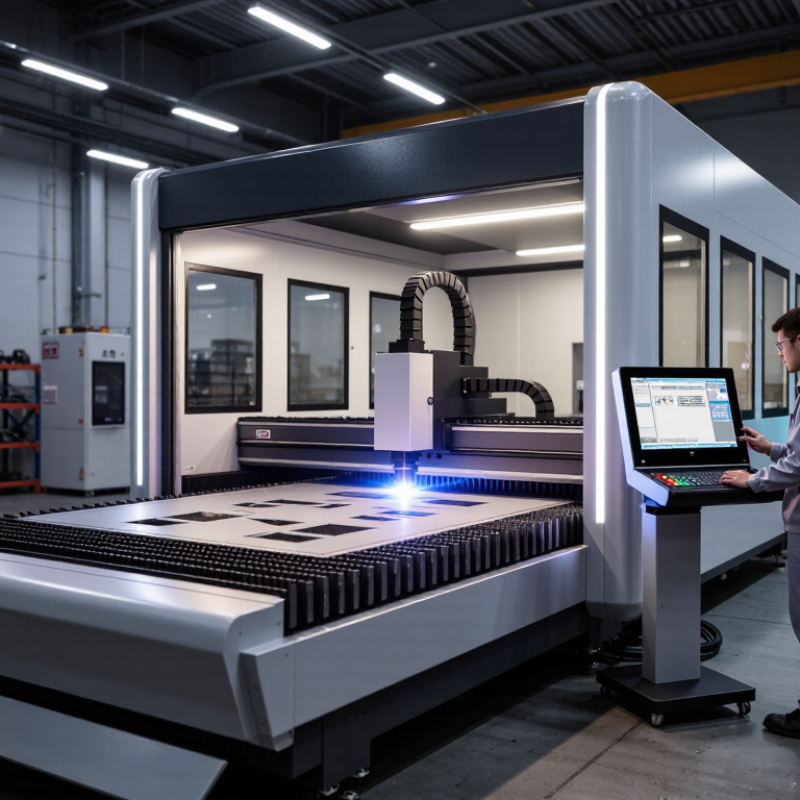
A reliable laser cutting system in 2026 should be measured, not merely advertised. Set two practical targets: above 95% uptime and ±0.02 mm repeatability. Uptime means productive cutting time, excluding planned maintenance. Ask suppliers for service records, fault logs, and test conditions. Without those details, a percentage can hide uncomfortable downtime. Measure reality.
During a factory trial, run repeated cuts across several shifts. Use the same program, material thickness, nozzle condition, and assist-gas settings. Record start time, interruptions, restart behavior, and completed parts.
Check repeatability at multiple positions, not one convenient corner. Inspect hole diameters, kerf widths, and edge alignment with calibrated tools. Temperature matters. Heat buildup can shift the focal point and slowly enlarge dimensions.
Tips: Request a witnessed test using your drawings and materials. Define acceptable scrap, recovery time, and measurement uncertainty before purchase. Keep a maintenance checklist. Review performance monthly, because early results can flatter a weak system. Even a careful evaluation can miss material variation or operator effects. Also, ±0.02 mm may not suit every geometry. That limitation should be documented, not hidden.
Set uptime above 95% and repeatability within ±0.02 mm. Measure both during real production. Advertised figures may hide interruptions.
Request service records, fault logs, and test conditions. Exclude planned maintenance clearly. During trials, record starts, stoppages, restarts, and completed parts.
Use your drawings and materials. Keep the program, material thickness, nozzle, and gas settings consistent. Run repeated cuts across several shifts.
Check several positions, not one convenient corner. Measure hole diameters, kerf widths, and edge alignment with calibrated tools. Record measurement uncertainty.
Yes. Heat buildup can shift the focal point. Dimensions may slowly enlarge. Check results at different times and temperatures.
A 1,070 nm fiber laser is a practical option. Thin sheets need speed and acceleration. Thick plates require penetration and careful heat control.
Thin steel often suits 1–3 kW. Medium plate may need 6–12 kW. Material grade, gas, nozzle design, and speed can change these estimates.
No. Beam stability and platform rigidity also matter. A powerful system can still create poor edges. Inspect dross, kerf angle, and heat-affected zones.
Look for cooling protection, autofocus monitoring, and abnormal-temperature warnings. Easy replacement-part access helps. Clear training and service documents matter too.
Not completely. Material variation and operator habits can distort results. Even ±0.02 mm may not suit every shape. Document weaknesses instead of hiding them.
Choosing a reliable laser cutting system in 2026 begins with defining measurable reliability targets, including more than 95% uptime and repeatability within ±0.02 mm. For cutting steel from 1 to 30 mm, a 1,070 nm fiber laser with appropriately matched power can provide a practical balance of speed, quality, and operating efficiency. Buyers should also compare core performance indicators, such as 30–40% energy efficiency and positioning accuracy of approximately ±0.05 mm.
Understanding what makes a laser cutting system reliable also requires reviewing safety and long-term ownership factors. The system should comply with IEC 60825-1, carry appropriate CE marking, and include properly interlocked guards and other protective controls. Finally, evaluate warranty coverage, service response times, spare-parts availability, maintenance requirements, and the estimated total cost over ten years. A dependable choice is not simply the machine with the highest specifications, but the one that consistently delivers accurate production, safe operation, and predictable lifecycle value.
