Datum Machine Datum Machine

2026 Top Production Challenges Laser Cutting Can Solve?

Time:2026-10-05 Author:Henry
0%

In 2026, manufacturers face tighter delivery schedules, rising labor costs, and growing pressure to reduce material waste. Laser cutting offers a practical response by improving speed, repeatability, and production flexibility. It can process steel, aluminum, stainless steel, and selected nonmetal materials with controlled heat and precise digital instructions. For production teams asking, “what challenges can laser cutting solve in production,” the answer begins with consistency. A well-calibrated system can repeat complex profiles throughout a large batch, reducing variation between the first and last part.

The technology also addresses slow changeovers and expensive tooling. Operators can modify a computer-aided design file instead of producing a new die for every design revision. This matters when customers request short runs, customized parts, or frequent product updates. Narrow kerfs can improve sheet utilization, although actual savings depend on nesting software, material thickness, and operator experience. Less scrap is possible. Not guaranteed.

Laser cutting can reduce manual marking, sawing, and secondary finishing. Cleaner edges may shorten downstream grinding, but oxidation, burrs, and heat distortion still require inspection. Production leaders should measure cycle time, consumable costs, maintenance, and defect rates before expanding capacity. Safety systems, ventilation, training, and documented quality checks remain essential. The machine is not a complete solution. Its value depends on disciplined processes, realistic material specifications, and skilled people who can identify when another cutting method is more suitable. This article examines the major production challenges laser cutting can solve in 2026, while recognizing where its advantages have practical limits.
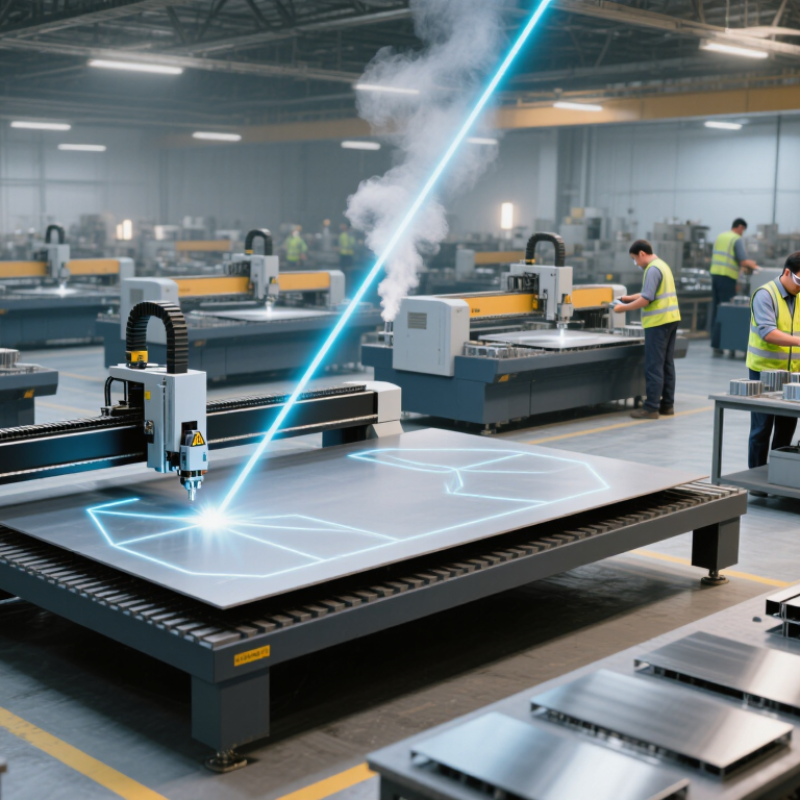
2026 Top Production Challenges Laser Cutting Can Solve?

What Production Challenges Will Laser Cutting Solve in 2026?

What production challenges will laser cutting solve in 2026? Labor shortages will remain a serious constraint. The World Economic Forum’s Future of Jobs Report 2025 identifies skills gaps as a major business barrier. Laser cutting can reduce dependence on repetitive manual operations. One trained operator can manage cutting, nesting, and job changes from a digital workstation. Shorter setups also help manufacturers handle smaller batches without excessive downtime. The improvement is practical, but not automatic.

Material waste is another costly challenge. The cutting plan can arrange parts closely, reducing unused sheet areas before production begins. This matters when metal prices and delivery times remain unstable. The International Federation of Robotics recorded 541,302 industrial robot installations worldwide in 2023. That figure reflects a wider move toward connected, automated production. Laser equipment can support this shift through sensors, automatic height control, and production records. Yet, precise hardware cannot repair poor drawings or incorrect material settings.

Quality consistency will also receive attention in 2026. A stable beam can produce repeatable edges across many parts, limiting variation between shifts. Digital job files improve traceability when dimensions or cutting conditions change. Small workshops may gain the most from this control. However, maintenance, operator training, and inspection still matter. A clean edge is not always a correct part. Manufacturers should test real materials, measure finished components, and question optimistic cycle-time claims before investing.

How Laser Cutting Improves Precision and Reduces Material Waste

2026 Top Production Challenges Laser Cutting Can Solve

Laser cutting improves precision while controlling material waste. A focused beam creates a narrow kerf, often close to 0.1 millimeters, depending on thickness and settings. This allows tighter nesting and fewer unused gaps between parts. The World Steel Association reported 1.89 billion tonnes of crude steel production in 2023. Even small scrap reductions matter at that scale.

In production reviews, accurate cutting also reduces rework. Clean edges can limit secondary grinding, especially on thin sheet metal. Automated nesting software calculates part placement before cutting begins. However, perfect nesting is unrealistic. Poor calibration, warped sheets, or incorrect focus can quickly erase expected savings. The International Energy Agency reported that industry used about 37% of global final energy in 2022. Efficient cutting supports both material and energy control, though the machine still needs proper maintenance.

Tips: Check lens condition, nozzle alignment, and gas pressure each shift. Measure the first cut before releasing a full batch. Keep a scrap log by material, thickness, and job number. Review it monthly. The numbers may expose waste that operators cannot see. Faster cutting is not always better; excessive speed can create rough edges and repeat work. Share real production data with operators, engineers, and quality teams. That human review remains essential.

How Automation Addresses Labor Shortages and Production Delays

2026 Top Production Challenges Laser Cutting Can Solve?

How Automation Addresses Labor Shortages and Production Delays

Labor shortages are turning skilled cutting operators into production bottlenecks. Deloitte and The Manufacturing Institute estimated that manufacturing could face 2.1 million unfilled jobs by 2030. Automated laser cutting reduces this pressure through nesting software, automatic material handling, and repeatable machine settings. One trained operator can supervise several processes instead of loading every sheet manually. In practice, this shortens handoffs and keeps cutting schedules more stable.

Production delays also come from inconsistent setup work. A modern automated cell can read digital job files, adjust cutting parameters, and detect certain process errors. The International Federation of Robotics reported over 4.2 million industrial robots operating worldwide in 2023. That figure shows automation is no longer experimental. However, automation does not remove every delay. Poor drawings, warped sheets, and weak maintenance planning still interrupt production. This is where many projects disappoint.

Tips: Measure loading time, setup time, and rework before buying equipment. Start with repetitive parts and predictable materials. Train operators to manage exceptions, not only press start. Keep a manual backup plan. It may feel inefficient, but one sensor failure can expose an over-automated workflow. Also review energy use, cut quality, and changeover time monthly. Data from the U.S. Bureau of Labor Statistics continues to show manufacturing productivity depends on both technology and worker capability. Machines help. People still decide whether the process works.

How Laser Cutting Supports Flexible, Customized Manufacturing

2026 Top Production Challenges Laser Cutting Can Solve?

How Laser Cutting Supports Flexible, Customized Manufacturing

Flexible manufacturing depends on fast changes, accurate parts, and controlled costs. Laser cutting supports all three without requiring dedicated tooling for every design. In production trials, operators can move from a prototype to a small batch by changing a digital cutting file. This helps manufacturers serve customized orders, replacement parts, and short product runs. Fine beams can create clean edges and detailed shapes in sheet metal. Less secondary processing may follow. Still, results depend on material thickness, heat control, and machine settings. Not every job suits laser cutting.

Tips: Confirm the material grade before programming. Test one sample first. Check edge quality, hole size, and warping. Use shared drawings with clear tolerances. Nesting parts closely can reduce scrap, but excessive nesting may complicate unloading. Small details matter.

Production teams should also connect cutting data with inspection records. A measured first article can reveal distortion before a full batch begins. Engineers may adjust speed, focus, or assist gas based on actual results. This practical feedback improves repeatability. However, flexibility can expose weak planning. Frequent design changes may create version errors or delayed approvals. I have seen efficient cutting become inefficient when files lack revision control. A simple naming system and approval step can prevent that. Customized manufacturing works best when digital preparation, skilled supervision, and honest inspection support the cutting process.

2026 Production Challenges Laser Cutting Can Solve

Representative maximum sheet-thickness capabilities for industrial fiber-laser cutting. Laser cutting supports flexible, customized manufacturing by processing multiple materials directly from digital designs without dedicated hard tooling.

Representative upper limits: actual capacity depends on laser power, material grade, part geometry, assist gas, and cutting-speed requirements. Digital file changes can help reduce tooling dependency and support economical production of customized or low-volume parts.

What Safety, Maintenance, and Cost Challenges Must Be Managed?

Laser cutting can reduce setup time and material waste, but safety controls remain essential. OSHA’s FY2023 enforcement data listed 1,644 machine-guarding violations and 2,554 lockout/tagout violations. These figures cover many industries, not laser cutting alone. However, they show a persistent control problem. Enclosures, interlocks, extraction systems, and documented isolation procedures need regular verification. A clean work area matters, too. Fine dust changes the risk.

Maintenance failures often begin with small details. A clogged filter can weaken fume extraction. A dirty lens can distort the beam and increase scrap. Thermal drift may create inconsistent edges across a long production run. The U.S. Department of Energy reports that motor-driven systems can consume more than half of industrial electricity. Chillers, compressors, and ventilation therefore deserve energy checks, not just repair schedules. Condition monitoring helps, although sensors can also create false confidence.

Cost control requires more than calculating hourly machine rates. The U.S. Energy Information Administration reported an average industrial electricity price of about 8 cents per kilowatt-hour in 2024. Actual rates vary widely by region and contract. A maintenance log should connect power use, downtime, consumables, rework, and labor. The uncomfortable part is that many factories record output accurately but measure hidden losses poorly. That gap can make an efficient-looking laser cell expensive. Review the numbers after a failed shift, not only during monthly meetings.

FAQS

How does laser cutting reduce material waste?

A focused beam creates a narrow kerf, sometimes near 0.1 millimeters. Tighter nesting leaves fewer unused gaps between parts. Measure actual scrap, though. Settings can change the result.

Can laser cutting improve production precision?

It can produce accurate shapes and clean edges, especially on thin sheet metal. Accurate cutting may reduce grinding and rework. Calibration still matters.

What causes expected material savings to disappear?

Poor calibration, warped sheets, incorrect focus, and excessive speed can increase waste. Rough edges may require another cutting pass or extra finishing. Faster is not always better.

How should operators check a machine before production?

Check the lens, nozzle alignment, and assist-gas pressure each shift. Measure the first cut before releasing the full batch. Small checks prevent larger losses.

How does laser cutting support customized manufacturing?

Operators can change a digital cutting file instead of creating dedicated tooling. This suits prototypes, replacement parts, and short production runs. Flexibility has limits.

What should be tested on the first sample?

Check edge quality, hole size, dimensions, and possible warping. Confirm the material grade before programming. One sample can expose distortion early.

How can production teams control design changes?

Use clear file names, shared drawings, revision numbers, and approval steps. Frequent changes can create version errors or delayed production. I would not trust memory alone.

Does close nesting always improve production efficiency?

Close nesting usually reduces scrap, but unloading can become difficult. Leave practical access between parts when handling requires it. Perfect nesting is unrealistic.

Conclusion

In 2026, manufacturers will continue seeking practical ways to improve productivity, accuracy, and cost control. This article explores what challenges can laser cutting solve in production, including inconsistent cutting quality, material waste, labor shortages, long production delays, and the growing demand for customized products. With precise digital control and repeatable performance, laser cutting can help create cleaner edges, reduce rework, and optimize material usage across different projects.

The article also examines how automation can streamline loading, cutting, and workflow coordination, allowing production teams to respond more efficiently to changing orders. Laser cutting supports flexible manufacturing by making it easier to produce varied designs and short runs without extensive tooling changes. However, successful implementation requires careful attention to operator safety, equipment maintenance, ventilation, training, energy use, and overall operating costs. Balancing these factors can help manufacturers achieve reliable output while building a more adaptable and sustainable production process.

Henry

Henry

Henry is a dedicated marketing professional with a profound expertise in the company's offerings. With years of experience in the industry, he possesses an impressive understanding of the market dynamics and consumer behaviors that drive success. Henry is committed to sharing his insights through......